Putin Acknowledges War Publicly for the First Time

Ukraine's Strategy for Crimea: What Lies Ahead
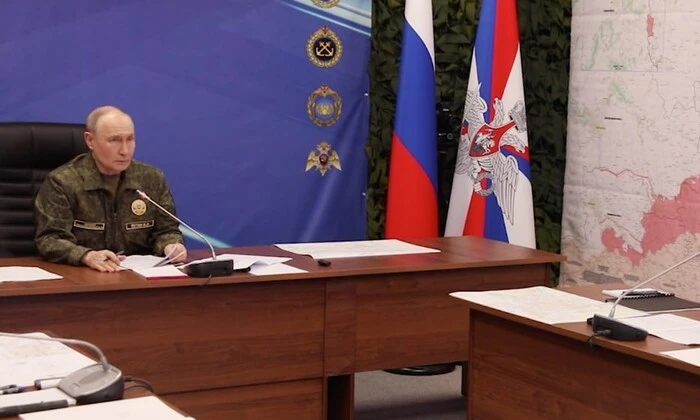
According to Главком: Experts and officials from the United Kingdom, the United States, and Germany are assessing the effects of Ukrainian strikes on Crimea and Russian infrastructure. For the first time, Vladimir Putin has publicly referred to the conflict as a war, declaring a state of emergency in Crimea due to power outages and fuel shortages. This marks a significant shift, as it openly admits that Russian forces can no longer ensure the security of the peninsula-a territory Putin had long portrayed as invulnerable. According to analyst Hamish de Bretton-Gordon, this development is a notable turning point.
Analysts suggest Ukraine is laying the groundwork for future offensive operations. George Barros from the Institute for the Study of War states:
“Ukraine is shaping the battlefield.” - George Barros, Institute for the Study of War
Serhiy Kuzan, head of the Ukrainian Center for Security and Cooperation, highlights the presence of large FSB contingents in Crimea, likely aimed at suppressing public discontent. Meanwhile, Russia is deploying additional troops and air defense systems to the peninsula.
Volodymyr Zelenskyy has announced a 40-day period of intensified pressure on Russia. Yevhen Karas, commander of the 413th Unmanned Systems Regiment, sees the destruction of numerous Russian air defense systems as a pivotal moment: “The moment we realized we had a chance came when we saw how many air defense systems we were able to destroy.”
In contrast, Dmytro Pletenchuk, spokesperson for the Ukrainian Navy, notes that completely isolating Crimea has not yet been achieved, stating: “Consider this a defense plan, not a victory plan.”
The Situation in Crimea and Its Impact on the War
In the broader military context, German Defense Minister Boris Pistorius has declared that the war in Ukraine is entering a decisive phase. He urges not to waste the moment and announces plans to establish a €40 billion NATO fund, with Germany contributing €12 billion. Pistorius also notes that the Bundeswehr is now better prepared for war than it was in 2022.
Vladimir Putin emphasizes that Russia’s primary goal remains the complete capture of Donbas and ‘Novorossiya.’ Experts continue to monitor developments in the region, as the situation could significantly influence the war’s trajectory. A Ukrainian special forces commander also observes, “I see no signs of the enemy collapsing.”
Thus, events in Crimea remain a focal point for international experts and officials, as they may prove decisive for the conflict’s future course.
Crimea’s status is central to understanding the strategic intentions of both Ukraine and Russia, as control over the peninsula could substantially alter the war’s dynamics. Given Ukraine’s efforts to escalate pressure on Russian forces and the international support it receives, upcoming actions may shift the regional balance of power. At the same time, Russia continues to bolster its military resources, signaling its determination to hold onto strategically vital territories.
As the situation in Crimea escalates, understanding the internal dynamics of Russian military leadership becomes crucial. Recent reports indicate that for months, Russian commanders have been hesitant to inform Putin about the true state of the conflict. This reluctance may have significant implications for Russia's strategic decisions moving forward. To explore this critical aspect of the war, read more about the challenges faced by Russian commanders in conveying the harsh realities of the battlefield.

Read also