A Russian Prisoner Loses a Leg to His Own Army's Mine: Where Are the Promised Payouts?

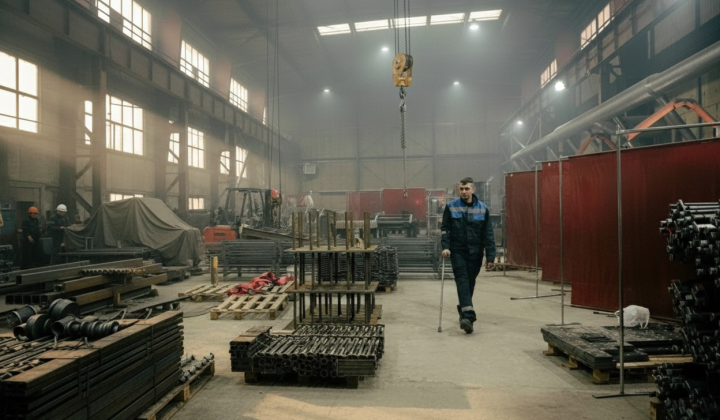
The Case of Russian Prisoner Aleksandr Abbasov-Derskhan
According to Главком: Russian prisoner Aleksandr Abbasov-Derskhan signed a contract with the Russian Ministry of Defense and was deployed to fight against Ukraine as part of the 'Storm Z' unit. While on a combat mission, he stepped on a Russian anti-personnel mine, resulting in the loss of his leg. His experience highlights the severe risks faced by soldiers in these units, as only one man from his group of roughly 180 survived the deployment.
After returning from the front, Abbasov-Derskhan did not receive the injury compensation he was promised, compounding his difficulties. He also faced challenges due to his criminal record, which was not expunged following his hospitalization. This situation creates significant obstacles for his future life and reintegration into society.
Commentary and the Broader Situation
In his comments, Abbasov-Derskhan stated:
“People do not value their own lives.”
He also emphasized that:
“patriotism is when you work here for 12 hours a day on my salary, buying discounted goods so you have enough money to last the month.”
These remarks reflect his perspective on the situation faced by a significant portion of the population.
Simultaneously, a campaign is underway at Russian universities to recruit students for service in drone system units. This points to the authorities' growing efforts to enlist youth for military service amid the ongoing conflict. Furthermore, in the temporarily occupied city of Donetsk, the occupation administration is seizing private vehicles for the needs of the Russian army, indicating direct military logistical demands in the region.
The overall situation reveals significant challenges for service members, particularly regarding compensation and social adaptation after deployment. At the same time, the active promotion of military service among youth and the confiscation of private transport suggest that Russian authorities are striving to sustain military efforts despite mounting losses and domestic social issues. This context underscores the protracted nature of the conflict and the continuous mobilization of resources to support it.
The challenges faced by soldiers like Aleksandr Abbasov-Derskhan are not isolated incidents. Many service members encounter significant hurdles upon returning home, often exacerbated by bureaucratic issues rather than outright desertion. This situation is mirrored in the experiences shared by others in the military, as highlighted in a recent report on the factors contributing to AWOL cases. Understanding these systemic problems can provide deeper insight into the broader implications for veterans and their reintegration into society.

Read also