AI Unlocks 73 New Underwater Calderas in a Major Leap for Volcanology

French Volcanologists Discover Hidden Ocean Craters with Machine Learning
According to НВ — Техно: On July 6 at 9:00 PM, a study by French volcanologists revealed that artificial intelligence had identified 73 previously unknown submarine calderas. This discovery more than triples the known count of such features, as fewer than 30 had been documented beneath the oceans until recently.
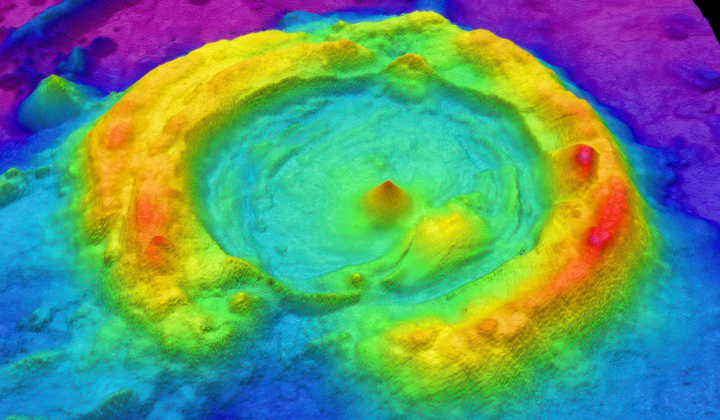
Calderas are vast, crater-like depressions that form when a volcano empties its underground magma chamber, causing the ground above to collapse. Since most of Earth's volcanic activity occurs underwater, these structures are critical to study. The 2022 eruption of the Hunga Tonga-Hunga Ha'apai submarine caldera demonstrated their danger vividly, generating atmospheric pressure waves that reached space, along with tsunamis and destruction thousands of kilometers away.
Research and Discovery
Led by Verolino, the research team adapted an AI algorithm originally trained to detect craters on Mars. Initially, the AI flagged 87,435 possible formations, but after verification, the list narrowed to 78 likely calderas. Of these, 5 candidates were already known as submarine calderas, while 73 structures proved to be new. Among the new objects:
- Eight are located on mid-ocean ridges,
- Nine are in volcanic arcs,
- Sixty-one are in intraplate tectonic zones.
The researchers highlighted 7 calderas as particularly promising targets for further study.
The scientists note: 'This research lays a critically important foundation for assessing submarine volcanic hazards and improving global preparedness.'
The findings were published in the journal Communications Earth & Environment, underscoring the work's significance for understanding underwater volcanic activity and its potential impacts on humanity.
Discovering new submarine calderas is a major scientific advancement, broadening our grasp of volcanic processes beneath the waves. This knowledge can aid in evaluating risks tied to underwater volcanism and enhance readiness for possible catastrophic events like tsunamis. Given that most volcanic eruptions occur in the oceans, this study could profoundly influence global safety and environmental research.

Read also