The AI Skills Gap in HR: A 7-Step Plan to Address a Critical Workforce Challenge

Bridging the AI Divide: A Critical Challenge for Human Resources
According to AIHR: As artificial intelligence reshapes the modern workplace, HR professionals are at the forefront of a significant skills challenge. Research indicates that 82% of HR specialists in the United States view AI as critical to their company's success, yet a majority report a substantial gap in the skills needed to leverage these technologies effectively. This urgency is underscored by another finding: 90% of HR professionals anticipate increased AI usage in their roles. This rapid adoption is creating a pressing need for upskilling across the industry.
Understanding the Three Dimensions of the Skills Gap
The AI skills gap confronting HR can be broken down into three core categories:
- The Competency Gap: A lack of hands-on proficiency with the necessary technological tools;
- The Confidence Gap: Apprehension and fear when facing new technologies;
- The Clarity Gap: Uncertainty about how AI can be practically applied within HR functions.
To close these gaps, HR professionals must develop a blend of technical and durable (soft) skills. Key technical skills for HR include:
- Applying AI tools;
- Prompt engineering;
- AI solution design;
- Algorithmic candidate selection;
- Digital HR management;
- AI governance and management.
Essential durable skills that complement technical knowledge are:
- AI literacy;
- Collaborating with AI systems;
- Ethical AI practice;
- AI advocacy;
- AI experimentation;
- AI leadership.
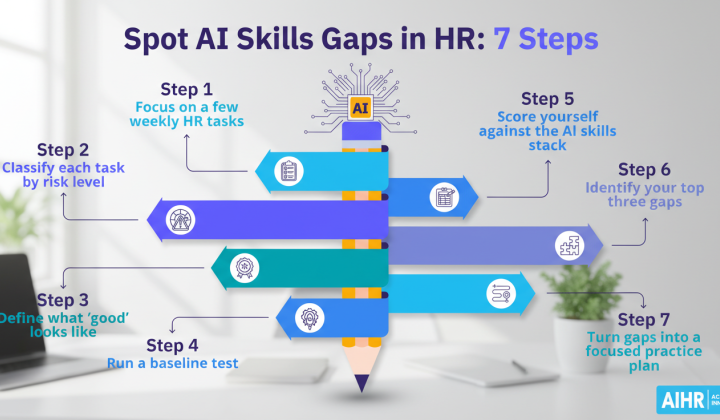
A Practical 7-Step Plan for HR Professionals
HR specialists can identify and address their personal AI skill gaps by following a structured seven-step plan. The process begins by focusing on a few recurring weekly HR tasks. Step two involves classifying each task by its level of risk. The third step requires defining what 'good' looks like for the execution of these tasks. Step four is conducting a baseline test of current capabilities, followed by step five: a self-assessment against an AI skills framework. The sixth step is to pinpoint the three most significant knowledge gaps, and the final, seventh step is to transform these gaps into a concrete practice plan.
In this era of rapid technological advancement, HR professionals have a unique opportunity not just to adapt to new challenges, but to actively shape their company's future by strategically deploying artificial intelligence.
The skills gap among HR professionals is a critical issue demanding immediate attention.
Given AI's expanding role in talent management, businesses must invest in training their HR teams to ensure new technologies are implemented effectively. This investment will not only boost productivity but is also crucial for maintaining competitiveness in the evolving labor market.

Read also