Plushchenko’s Son Explains Decision to Compete for Azerbaijan

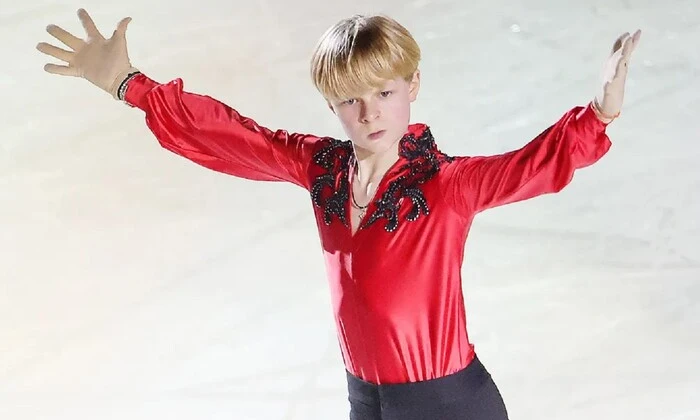
Alexander Plushchenko’s Move to the Azerbaijani National Team
According to Главком: Evgeni Plushchenko has stated that his 13-year-old son Alexander switched to representing Azerbaijan in order to gain the opportunity to compete internationally. Alexander Plushchenko received Azerbaijani sports citizenship in May 2026. According to his father, Alexander lives in Russia and trains at the private 'Angels of Plushchenko' Academy, which Evgeni founded.
'Sasha lives in Russia and trains at my private academy. Nobody has funded him except his mom and dad. In the end, sport has no borders,' Evgeni Plushchenko
Alexander Plushchenko has been training at the 'Angels of Plushchenko' Academy since 2017. In his statement, Evgeni Plushchenko argued that if an athlete is only 13 years old and has not yet represented any national team in international competitions, they should not be restricted: 'for heaven’s sake, skate, make fans happy, enjoy yourself, and have fun.' He also expressed concern about older athletes who have already represented Russia on the international stage switching countries.
Russian National Skeleton Team Training Camp in Crimea Canceled
Separately, it has been reported that a training camp for the Russian national skeleton team in annexed Alushta has been canceled. Senior coach Denis Alimov announced the decision, noting that the cancellation of the July camp was made quite some time ago. Athletes will continue preparing for the season in their home regions under the guidance of their personal coaches.
'I don’t think canceling the camp in Crimea will cause any major problems,' Denis Alimov
These events highlight the complex landscape of international sports, where political and social factors can shape athletes' careers. Alexander Plushchenko’s switch to the Azerbaijani team may be seen as a way to bypass restrictions arising from geopolitical circumstances, particularly for young athletes aiming to compete globally. Meanwhile, the cancellation of the Russian national team’s camp in Crimea underscores ongoing instability in the region and how external conditions continue to affect athlete preparation.
The shifting dynamics of international sports are further illustrated by recent developments, such as FIFA and UEFA's hesitance to reinstate Russia amid concerns over potential boycotts. These factors not only impact individual athletes like Alexander Plushchenko but also shape the broader landscape of competitive sports, where political considerations increasingly influence participation and representation.

Read also