During the Syrian War, a Man in Idlib Discovered a Cave Containing Nearly 400 Ancient Artifacts

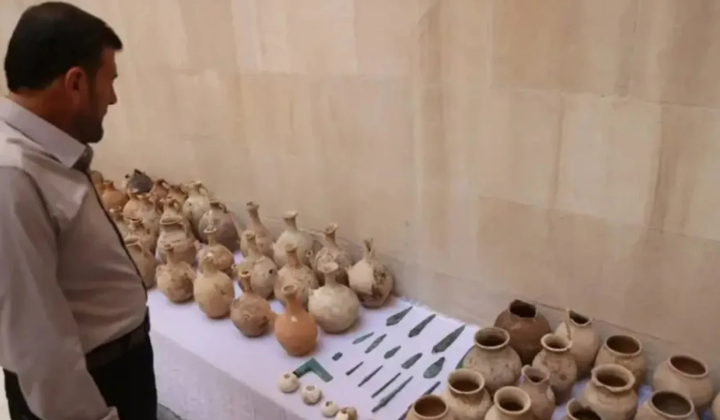
Archaeological Discovery in Idlib
According to НВ — Техно: While digging a bomb shelter in Syria’s Idlib province, Zia Hanus uncovered a cave filled with close to 400 archaeological items. Throughout the ongoing Syrian conflict and multiple displacements, Hanus preserved this collection for eight years. Recently, he handed over the artifacts to Syria’s General Directorate of Antiquities and Museums to enable further study. The exact age and cultural origins of these objects remain undetermined.
The Region’s Rich Archaeological Heritage
Idlib holds a deep history of human settlement dating back millennia. It is home to the ancient city of Ebla, which thrived during the Bronze Age in the third millennium BCE. Excavations at Ebla have revealed:
- palatial structures
- temples
- fortifications
- thousands of cuneiform tablets
Nearby, the Tell Mardikh settlement near Sarakeb lasted until the Roman Empire era. Northwestern Syria preserves numerous remnants from the Roman and Byzantine periods, with UNESCO recognizing over 700 archaeological sites from these eras in the area.
In addition to these findings, an ancient fresco depicting Greek mythology was discovered near Homs, with excavations beginning in 2018. Measuring 20 by 6 meters, the mosaic is made of painted stones approximately 1.2 cm square. It illustrates scenes from the Trojan War, Hercules’ ninth labor, the killing of Hippolyta, and episodes from both the Iliad and the Odyssey. Previous rebel control in the Homs region delayed archaeological work there.
The artifacts uncovered by Zia Hanus require comprehensive scientific examination to establish their historical timeframe and cultural background. Given Idlib’s extensive archaeological record, this discovery could significantly enhance understanding of the region’s past, spanning from the Neolithic period through Roman and Byzantine times.
This remarkable find in Idlib highlights the cultural and historical importance of the area despite ongoing conflict. Protecting and studying such discoveries is vital for restoring Syria’s historical memory and heritage. Moreover, the research on these artifacts and the Homs fresco may raise international awareness about preserving cultural treasures amid warfare.

Read also