Ukraine's Commander-in-Chief Assesses 2025: Russian Casualties Outpace Recruitment, Donbas Offensive Fails

Russian Army Casualties in 2025
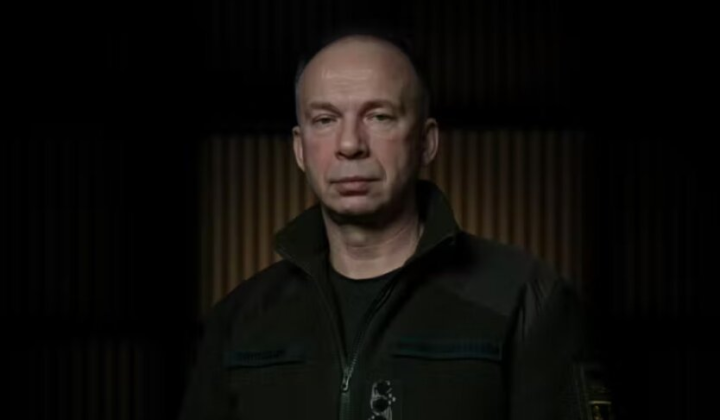
According to ХВИЛЯ: In a pivotal shift for the war, Ukraine's Commander-in-Chief, Oleksandr Syrskyi, revealed that Russian military losses in 2025 exceeded the number of new personnel recruited. Russia mobilized and conscripted 406,000 individuals, yet its total casualties-killed and wounded-reached approximately 418,000 soldiers. This attrition occurred despite Russia expanding its offensive grouping to 713,000 troops, underscoring the intensity of its campaign. The enemy continues to sustain daily losses of about 1,000 to 1,100 personnel, a rate that strains its long-term operational capacity.
Frontline Plans and Actions
Russia's strategic objectives for 2025, which included the complete seizure of the Donbas and territories in the Zaporizhzhia, Dnipropetrovsk, and Kherson regions, along with creating a buffer zone in the Kharkiv and Sumy areas, were not realized. Instead, the Armed Forces of Ukraine launched two offensive operations on Russian territory: one in the Belgorod region during March-April, followed by another in the Kursk region in May-June. Syrskyi noted these actions forced the enemy to redeploy its forces, disrupting their plans. The ongoing conflict has evolved into a war of attrition, heavily reliant on drone warfare and deep strikes.
In August 2025, Russian forces attempted to encircle the Pokrovsk-Myrnograd agglomeration in the Dobropillia direction. A Ukrainian counterattack, however, resulted in the forward units of Russia's 51st Army becoming semi-encircled. Syrskyi also reported that Ukrainian forces now control 97% of Kupiansk, hold the northern part of Pokrovsk, and have stabilized the western flank.
The scale of drone warfare is immense, with both sides deploying between 6,000 and 8,000 FPV drones daily. In 2025, Ukrainian forces struck 719 targets deep inside Russia, including airfields and oil and gas facilities, inflicting over $15 billion in damages. Furthermore, the push of the Russian fleet back to Novorossiysk secured the operation of a grain corridor, through which more than 6,000 vessels have passed.
Oleksandr Syrskyi emphasized the critical importance of battlefield actions, stating their goal is to prevent the enemy from advancing deeper into Ukrainian defenses and to liberate territories where possible, thereby creating conditions for just negotiations.
These developments indicate significant shifts in the frontline military situation, where continued Ukrainian active operations are complicating the implementation of Russian strategic plans. The substantial losses suffered by Russian troops may impact their ability to sustain offensive actions in the future. The events of 2025 could mark a crucial phase in the conflict, reflecting not only military but also economic consequences for both sides, which may alter the course of future negotiations.

Read also