‘Shaman’ Buried Near Stonehenge Turns Out to Be a Woman, DNA Reveals

A Surprising Discovery: Bronze Age ‘Shaman’ Identified as Female
According to НВ — Техно: DNA analysis of a 4,000-year-old skeleton buried near Stonehenge has overturned long-held assumptions: the individual once thought to be a male shaman was, in fact, a woman. The grave was first uncovered in 1801 near the village of Upavon, about 16 kilometers west of Stonehenge. Researchers at the Francis Crick Institute in London conducted the study, identifying XX sex chromosomes that confirm the remains are female.
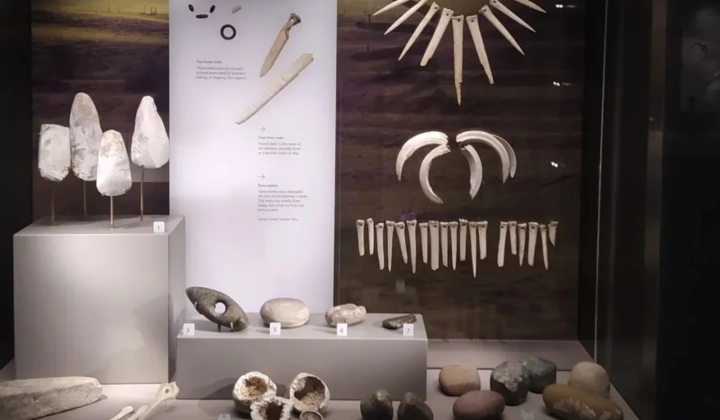
To verify the findings, scientists tested DNA samples taken from a tooth and a toe bone. The results indicate the woman stood roughly 165 centimeters tall and died around the age of 45. Notably, she had arthritis in her right wrist but not her left. The burial also contained a set of metalworking tools, including:
- stone axes
- flint tools
- a metal-marking implement
- a dark touchstone
These tools bore traces of gold, suggesting the woman specialized in metalworking.
English archaeologist William Cunnington excavated the burial mound in the 19th century. A 2022 study further indicated that this individual was likely a jeweler, reinforcing her skilled role in Bronze Age society. Commenting on the discovery, David Dawson stated:
“This completely shatters previous assumptions. We’ve grown so used to the idea that men do everything-men are leaders, men are metalworkers. But here we have undeniable proof of a female metalworker. And metalworking was the space-age science of its time.”
Interestingly, a 2020 DNA analysis revealed that a Scythian warrior from the Saryg-Bulun kurgan was actually a 13-year-old girl. That young warrior was buried with an axe, a birch bow, and a quiver containing ten arrows, each about 70 centimeters long, tipped with bone and bronze. Susan Greaney remarked:
“The ability to transform objects through the delicate and skillful process of covering them with gold leaf may have been seen as a magical or ritual process-a secret method known only to a select few.”
This case highlights the need to reassess historical views on gender roles in ancient societies. The discovery of a woman working as a metalworker shows that females could hold occupations traditionally considered male. Along with other similar findings, this revelation may reshape our understanding of social structures and women’s roles during the Bronze Age. Such research also offers new perspectives on women’s place in history and their contributions to the development of civilizations.

Read also