Court Rules Ex-Minister Galushchenko's Detention Unlawful in Partial Ruling

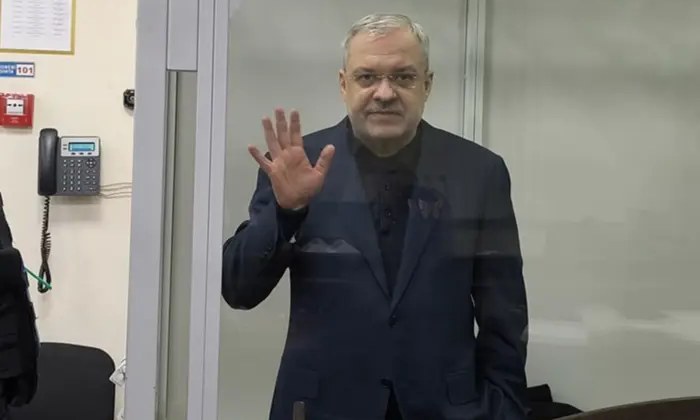
High Anti-Corruption Court Issues Ruling
According to Главком: The High Anti-Corruption Court has partially upheld a complaint by former Energy Minister Herman Galushchenko, declaring his detention unlawful. The judge ruled that the time of his actual detention should be recorded as 06:00 on February 15, 2026. However, the court rejected the defense's request to release Galushchenko from custody, meaning he will remain under arrest. This ruling is a significant development in a high-profile case that tests Ukraine's judicial reforms.
Background of the Galushchenko Case
Galushchenko was detained by detectives from Ukraine's National Anti-Corruption Bureau (NABU) while attempting to leave the country. He faces charges of money laundering and participation in a criminal organization. His arrest was part of a large-scale operation codenamed 'Midas,' in which NABU announced suspicions against seven individuals as part of an investigation into corruption schemes within the energy sector.
Other notable figures implicated in the case include:
- Timur Mindich, a businessman and co-founder of the 'Kvartal-95' studio, identified in NABU recordings under the codename 'Carlson';
- Ihor Myroniuk, a former advisor to the energy minister;
- Dmytro Basov, the security executive director of the 'Energoatom' company;
- Oleksandr Zuckerman;
- Ihor Fursenko;
- Lesia Ustymenko;
- Liudmyla Zorina.
Thus, while the court's decision marks an important stage in Galushchenko's case, his ultimate fate remains uncertain as he stays in custody. The energy sector has long been a focus for anti-corruption bodies due to its strategic importance and history of graft.
This case underscores the seriousness of anti-corruption efforts in Ukraine, particularly in the energy sector, where corrupt schemes can have significant consequences for the country's economy. Operation 'Midas' reveals new aspects of the investigation that may influence the subsequent steps of both law enforcement and the judicial system.
The situation surrounding Galushchenko may serve as a crucial test for Ukraine's anti-corruption policy and its effectiveness in combating high-level, sophisticated corruption.

Read also