Uranus's Moons Were Destroyed and Reborn Twice, New Study Reveals

Investigating Uranus's Moons
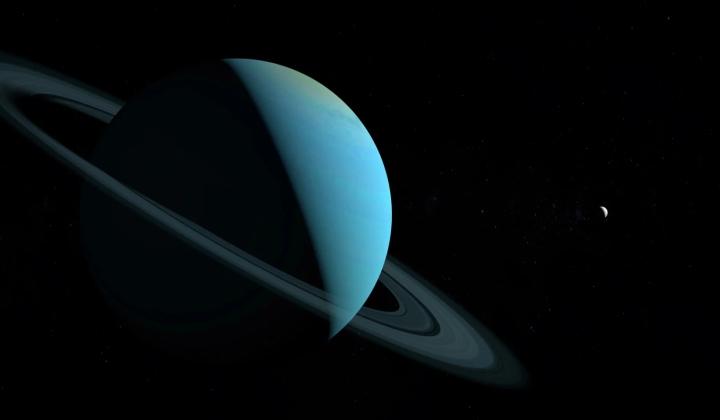
According to НВ — Техно: A massive collision early in the solar system's history, followed by a reshuffling of giant planets, may have wiped out and then recreated Uranus's moons-not once, but twice. Led by Matthew Clement from the Johns Hopkins University Applied Physics Laboratory, along with researchers from several U.S. universities, the study ran nearly 10,000 computer simulations. From those, 122 scenarios matched the known structure of the solar system today, highlighting how rare and violent the moon-forming process was.
Uranus spins almost completely on its side, and its moons share this extreme tilt. That unusual orientation is thought to have come from a massive impact early in the solar system's formation. A second catastrophic event occurred when giant planets like Jupiter and Saturn swapped positions, pushing Uranus and Neptune farther from the Sun. Under those conditions, if another giant planet came within 3 million kilometers, local objects were doomed due to crossing orbits and high-speed collisions.
Key Findings
The results show that today's moons are descendants of reformed objects that emerged after those devastating impacts. Following each collision, cosmic debris turned into clouds of fragments, which later coalesced under gravity. For instance, Miranda, one of Uranus's moons, contains far less rock than the planet's other satellites. The large moons of Jupiter and Uranus survived less than 15% of the time, underscoring how harsh the conditions were for moon formation.
The farthest large moon of Uranus, Oberon, orbits at roughly 580,000 kilometers from the planet. These findings have been accepted for publication in the journal Icarus, confirming their significance for understanding the evolution of the solar system and its components.
This research matters beyond astronomy: it sheds light on the dynamic mechanisms behind planetary and moon formation across the universe. It emphasizes the violent, collision-driven history of space and may help predict how other planetary systems evolve-and even identify potential threats to Earth.
The study of Uranus's moons sheds light on the violent history of our solar system, but the exploration of celestial bodies doesn’t stop there. Recent research reveals that rogue planet satellites may harbor liquid oceans for billions of years, suggesting that even in the harshest environments, life-sustaining conditions could exist. This intriguing possibility opens new avenues for understanding how diverse planetary systems can be.

Read also