Satellite Imagery Unearths 260 Ancient Burial Sites Across Egypt’s Desert

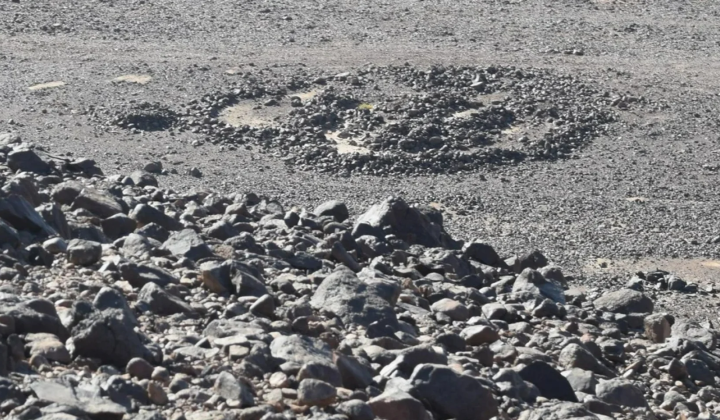
Atbai Survey Project: Discovering the Enclosures of Egypt’s Eastern Desert
According to НВ — Техно: Through the Atbai Survey Project, researchers have identified 280 large burial structures spanning from southern Egypt to the border with Eritrea. Of these, 260 were previously unknown and came to light only after analyzing satellite photos from platforms like Google Earth and Bing Maps. Known as Atbai enclosures, these stone structures date back to the 4th and 3rd millennia BCE.
Leading the study is Dr. Maria Carmela Gatto of the Institute of Mediterranean and Oriental Cultures at the Polish Academy of Sciences. A key site under investigation is the burial complex at Wadi Hashab in Egypt’s Eastern Desert, where archaeologists uncovered 25 tombs. Radiocarbon dating indicates that this site remained in use for nearly two thousand years after its initial construction. According to the research, building a single medium-sized stone enclosure would have required more than 160 days of labor from one person.
“We are not dealing with isolated monuments, but with a vast cultural tradition spanning thousands of square kilometers,” Dr. Gatto stated.
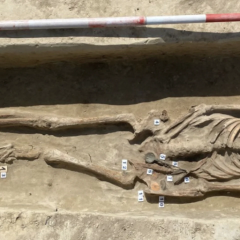
She also emphasized that 'the importance of animals was reflected in the organization of the cemetery space.' In some tombs, a central human burial was encircled by graves containing cattle and other animals. This layout may point to a social hierarchy and elite status tied to livestock ownership.
Cultural Links and Social Structures
The Atbai region lies between the Nile Valley and the Red Sea. Similar burial traditions have been documented in other countries, including:
- Libya
- Niger
- Chad
- Saudi Arabia
- Kenya
- Djibouti
This pattern underscores the breadth of cultural connections and influences in ancient times.
The archaeologists’ work extends beyond architectural findings. Earlier reports revealed the discovery of remains from the largest church in Dongola, Sudan-a structure that may have served as the residence of an archbishop overseeing a territory stretching roughly 1,000 kilometers along the Nile. Dongola was the capital of Makuria, and the Faras Cathedral with its wall paintings was uncovered by Professor Kazimierz Michalowski over 60 years ago.
In this way, the Atbai Survey Project is opening new frontiers for studying the region’s ancient history, making significant contributions to archaeological research in Egypt’s Eastern Desert and neighboring areas.
The newly identified Atbai enclosures and burial complexes not only enrich our understanding of the archaeological heritage of Egypt’s Eastern Desert but also reveal complex social structures and cultural practices of ancient civilizations. Analyzing these finds will help clarify how social hierarchies and cultural ties developed in this region and how they influenced surrounding territories. Ongoing research may continue to uncover new aspects of human history and our interaction with the environment.
In a striking parallel to the discoveries in Egypt, recent excavations in Slovakia have revealed 77 headless bodies found in a Neolithic ditch. This finding not only sheds light on burial practices but also raises questions about social structures and rituals in ancient communities, similar to the insights gained from the Atbai Survey Project.

Read also