A jacket that pulls drinking water from the air has been developed by Texas researchers.

Water-Harvesting Jacket Technology Unveiled
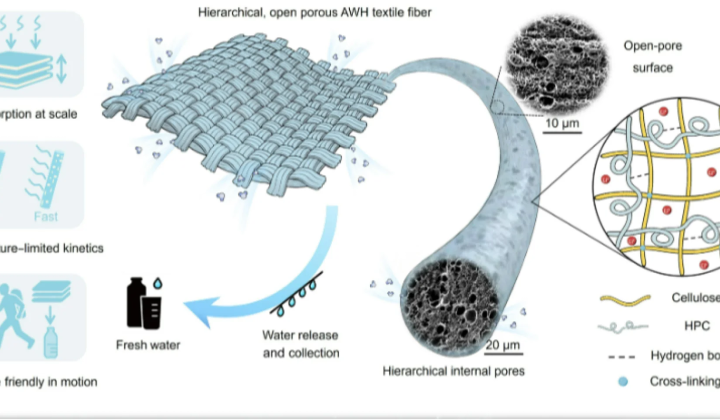
According to НВ — Техно: On June 12, a new jacket technology capable of extracting water from the air using specialized textiles was introduced. Developed by researchers at the University of Texas, the jacket can produce between 400 and 900 milliliters of drinking water per day. During tests, the maximum recorded water collection reached 1.3 liters per day. This achievement was made possible by improving the scale by three to ten times compared to conventional materials.
Unique Textile Properties
The fabric used in the jacket is made from biomass-derived materials. Its unique structure allows it to absorb moisture from the air and, when exposed to sunlight, release it as liquid. According to Guihua Yu, a professor of mechanical engineering at the Walker Department of Mechanical Engineering and the Texas Materials Institute:
'Water harvesting from air is usually imagined as a stationary device, like a box, panel, or a large sorbent bed. Here, we wanted to rethink the form factor of the technology. If the fabric itself can collect water from the air, it opens up a new direction for personal and portable water access.' - Guihua Yu
Beyond jackets, this technology could also be applied to backpacks and tents. As noted by Keith Johnston, co-author and McKetta Chair in Chemical Engineering at the Cockrell School of Engineering:
'A key achievement here is that the team didn't just create another material that absorbs water. They developed a pathway for rapidly moving water from vapor in the air to liquid on the fiber surface, and then into the textile.' - Keith Johnston
This technology holds particular significance for regions with limited water access, including:
- North Africa
- The Middle East
- South Asia
- Sub-Saharan African countries
By taking an innovative approach to harvesting water from the air, this development could significantly improve living conditions in these areas.
The creation of a jacket capable of extracting water from the air opens up new possibilities for improving water supply in regions suffering from water scarcity. This invention could become a vital tool in combating water shortages, a critical issue for many countries with limited access to fresh water. As such, further research and commercial adoption of this technology could substantially change the water supply situation in the world's most vulnerable regions.

Read also