Rare Child Burial with Iron Sword Unearthed in France

Archaeological Discovery in Pithiviers
According to НВ — Техно: On July 17 at 09:30, French archaeologists uncovered the burial of a child under 15 years old, accompanied by an iron sword still in its scabbard, dating to the late 5th century BCE. The find was made at a Gallic settlement site in Pithiviers (Loire region) during excavations conducted by the French National Institute for Preventive Archaeological Research (Inrap).
The excavations took place at the Bois-Mador area in Pithiviers as part of a bypass road project carried out in 2010. Archaeologists were investigating a large Gallic settlement dating from the 5th to 4th centuries BCE. During the dig, the remains of six individuals were found in four separate storage pits spread across three larger pits. One of the storage pits contained three bodies, two of which were placed face down. Another pit held the body of a man with his hands and feet bound and his head detached.
Significance of the Find
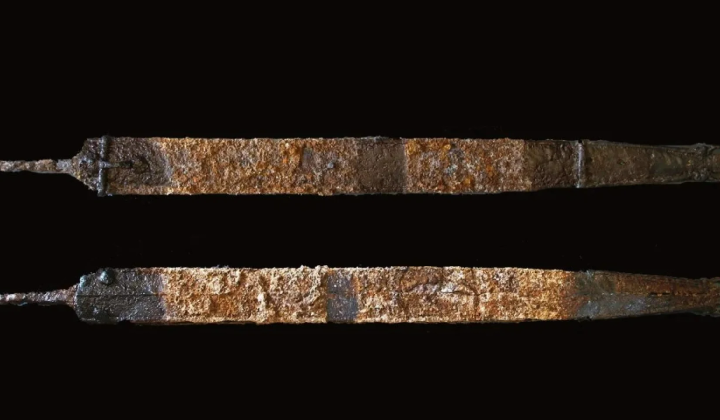
The most striking discovery came from a third storage pit, also dated to the late 5th century BCE. Here, the remains of a child under 15 were found curled up near the edge of the pit. The burial included a fibula, possible fragments of a shield, and an iron sword sheathed in a scabbard. The sword, which is standard in shape and size, was placed near the child's feet rather than worn. This burial is one of the oldest ever found in the Loire department. The scabbard is unadorned, which is unusual for the late Iron Age.
It is worth noting that burials of young individuals with weapons are extremely rare in official Iron Age cemeteries, making this discovery particularly significant.
This find contributes important insights into the burial practices and social structures of Gallic tribes during the Iron Age. It also highlights the rarity of child burials with weapons, which may indicate special social or ritual circumstances tied to the child's status. Artifacts recovered, such as the sword and possible shield fragments, could provide new data on the military culture and customs of the era.
This remarkable find in Pithiviers is not the only significant archaeological discovery shedding light on ancient burial practices. Recently, a 6,000-year-old infant skeleton was unearthed in Mesopotamia, revealing signs of a violent past. Such discoveries provide crucial insights into the social structures and rituals of early civilizations, highlighting the complexities of human history across different regions and eras.

Read also