1st-Century Roman Mosaic Featuring a Dolphin Unearthed in France

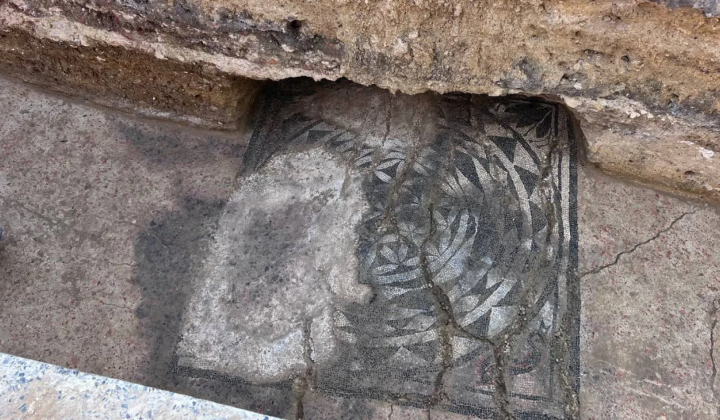
Exceptional Roman Mosaic Discovered in Soissons
According to НВ — Техно: Archaeologists in Soissons, France, have uncovered a rare Roman mosaic dating back to the late 1st century AD. This find not only underscores the historical significance of the area but also provides evidence of the region's Romanization. The central panel of the mosaic is a square measuring 1.56 meters on each side, featuring a black-and-white circular medallion composed of interlocking triangles and diamonds. In the corners of the square are decorative motifs, including a lotus-like flower and a dolphin with red fins.
Historical Importance of the Discovery
The modern-day Saint-Crépin district, where the mosaic was found, was an ancient settlement inhabited between the 1st and 3rd centuries. According to available information, the last time a similar mosaic hall was discovered in Smirna was 70 years ago, with dimensions of roughly 3 by 4 meters. This discovery could offer fresh insights into the cultural and aesthetic influences of the Roman Empire in this part of the world.
Archaeologists emphasize the significance of the find, stating: 'It was also intriguing to find a marine mammal adorning a mosaic in an inland city like Soissons. Dolphins were a popular motif in Roman art across the empire, and their inclusion in this mosaic shows how widespread Roman standards of aesthetic taste had become during the early imperial period.'
Plans are underway to extract, study, and restore the mosaic, which will open new avenues for researching the history and culture of this region. The discovery has already sparked considerable interest among archaeologists and historians eager to better understand how Roman culture influenced local populations. The news of this find was published on June 12.
This discovery serves as important evidence of Roman presence in France and helps clarify the process of Romanization that occurred in these territories. The Roman mosaic is not only aesthetically valuable but also provides information about cultural influences and social connections between the Roman Empire and local communities, which could significantly alter our understanding of the historical development of this region.

Read also