Seventh Medieval Tombstone Unearthed Beneath Ice Cream Shop in Gdańsk

Archaeological Discoveries in Gdańsk
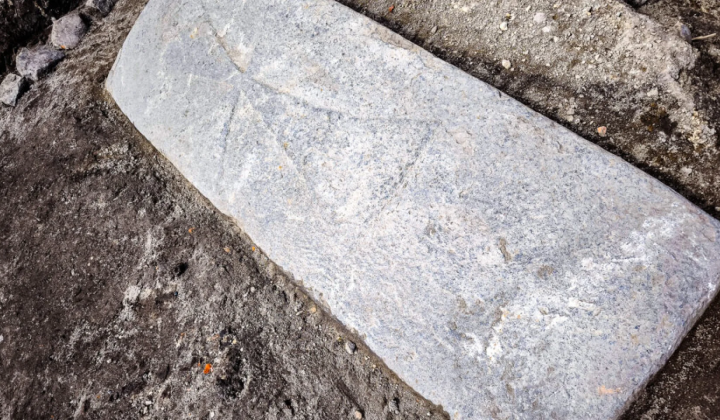
According to НВ — Техно: A seventh medieval tombstone from the 13th century has been uncovered beneath the "Miś" ice cream parlor in Gdańsk, adding to excavations of a unique oak church built around 1140 and a necropolis containing over 200 graves. This find marks the first major success of the new archaeological season on Grodzka and Sukienna streets. The granite slab is the seventh tombstone discovered at this site, three of which are decorated with crosses.
Historical Significance of the Find
These tombstones date back to the 13th century, pointing to burials from the pre-Teutonic era. It is important to note that the Crusaders captured Gdańsk in 1308, an event that likely influenced burial practices and cultural traditions of the period. The church uncovered during the digs was constructed from hewn oak logs around 1140, a date confirmed through dendrochronological analysis. Its design follows a Greek cross plan, typical of architecture from that time.
Popular imagination often links such granite crosses with the Teutonic Order, but any direct connection between these tombstones and the Order requires further study. Two similar tombstones from Gdańsk have already been transported to the museum at Malbork Castle, underscoring the importance of these finds for understanding regional history. The "Miś" ice cream shop, long a familiar city landmark, has now become the site of significant archaeological discoveries that offer deeper insights into Gdańsk's past.
This discovery holds great value for archaeology, as it confirms the existence of ancient burial traditions in the area and may yield new information about the cultural context of the era before Gdańsk was taken by the Crusaders. Ongoing research could illuminate the relationships between these burials and the development of local architecture, as well as the influence of the Teutonic Order on the cultural traditions of the time.
This recent discovery adds to the growing list of significant archaeological finds in the region. For those interested in the rich history of Gdańsk, a previously uncovered 13th-century tombstone provides further context on the burial practices and cultural influences prior to the Crusaders' arrival. Exploring these links can enhance our understanding of the area's medieval heritage.

Read also