Kazakhstan Dig Reveals Golden Horde Mosque Alongside Mass Grave

Silk Road Traces
According to НВ — Техно: Central Asian archaeology continues to shed light on the medieval networks that linked distant cultures. Archaeologists working at Otrar, an ancient settlement in Kazakhstan’s Turkistan region, have uncovered major finds under the direction of Professor Mukhtar Kozha. These include a dakhma-type collective burial, remnants of a Golden Horde-era mosque, and the first stone-paved street of its size ever found at the site. Dated to the 13th–14th centuries, the discoveries underline Otrar’s prominence as a Silk Road trading center.
Excavation Work and Discoveries
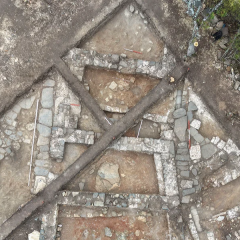
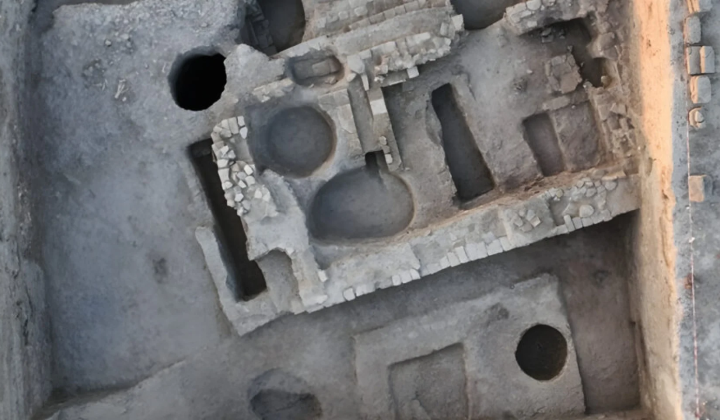
The dig began in June 2026. Professor Kozha’s team from the Institute of Archaeological Research exposed five successive building horizons. The mosque walls, recovered from the deepest level, date to the 13th or 14th century based on associated ceramics. Adjacent to the mosque, archaeologists found a wide street paved with large stones leading to fired-brick steps. It is the first paved street of this scale discovered in Otrar.
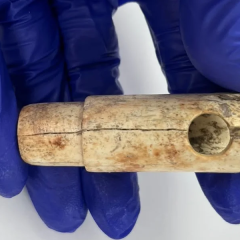
The collective burial holds remains of roughly 50 individuals. In Central Asian tradition, dakhmas referred to Zoroastrian towers of silence, elevated burial platforms, or Islamic-period vaults. After excavation, the remains will undergo detailed anthropological analysis. Additional artifacts include:
- a piece of a painted window grille
- parts of an inkwell
- metal fittings from a gate
- a ring bearing an inscription, possibly a personal seal
The team also recovered ceramics decorated in Chinese style, Chinese coins, and coins struck by the Golden Horde khans. Together, these finds confirm Otrar’s role as a major Silk Road hub connecting Central Asia to China, India, Iran, and the Volga region.
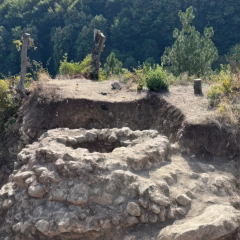
On the outskirts of Otrar, residential quarters from the early Islamic period were also identified; radiocarbon dating places them around the mid-eighth century. Conservation work is currently underway at the site, which is on UNESCO’s tentative World Heritage list. Aerial photography of the Otrar archaeological complex captures the scale and importance of these discoveries.
What has been unearthed at Otrar strengthens the picture of this region as a vital Silk Road crossroads linking diverse cultures and civilizations. The mosque and the collective burial, in particular, offer fresh avenues for understanding medieval Central Asian history, social organization, and religious practices. Continued conservation and further research could protect this legacy and draw greater visitor interest to the area.

Read also