1,400-Year-Old Ceremonial Complex Unearthed in Mexico

Archaeological Discovery in San Lucas
According to НВ — Техно: A remarkable ancient ceremonial complex and a rare stone sculpture have been uncovered in the residential district of Coatepec, San Lucas, Mexico. The findings emerged during a salvage archaeology project led by Mexico's National Institute of Anthropology and History (INAH). Dating to the Early Classic period (200–600 CE), the site includes a rectangular platform measuring 30 meters long and 12 meters wide, constructed from stone slabs and white limestone.
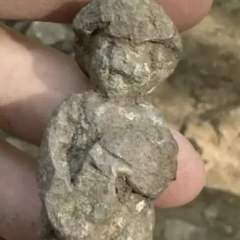
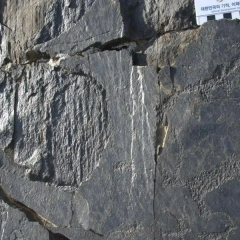
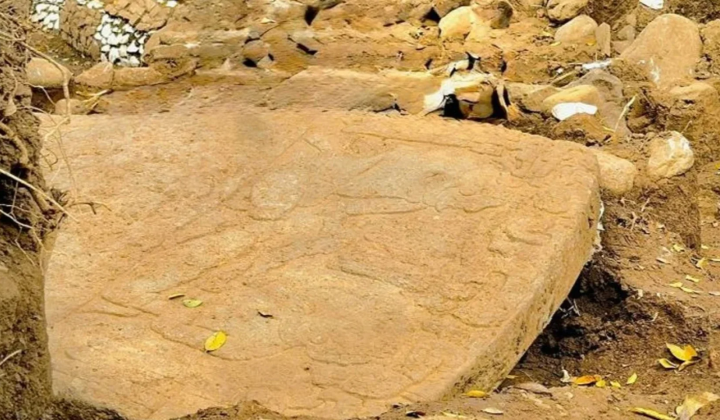
This platform features distinctive decorative elements, such as engraved geometric patterns and rounded stones embedded along two of its sides-architectural traits previously undocumented in the region. Associated with the platform is a 1.88-meter-tall monolithic sculpture depicting two figures receiving a sacred liquid from a divine entity. One of the figures exhibits Maya characteristics. Both artifacts are exceptionally well-preserved, and restoration work has already commenced.
Ceremonial Offerings and Ongoing Research
Excavations also yielded ceremonial offerings, including:
- charred remains of maize
- buried pottery vessels
- a fragmented green stone bead
These artifacts have been transferred for laboratory analysis. The archaeological team is led by Alberto Vázquez Domínguez and Lino Espinosa García from the INAH Veracruz Center. So far, no evidence links the findings to the Totonac civilization. Researchers suggest the site may have belonged to a local population that maintained connections with other groups along the Gulf Coast of Mexico.
Mexico's Secretary of Culture, Claudia Curiel de Icaza, remarked that 'every structure, object, and symbol emerging from archaeological research reminds us that Mexico possesses one of the deepest and most diverse cultural heritages in the world.'
Previously, a burial site roughly 1,500 years old was discovered in the state of Nayarit, containing one complete skeleton and bones from multiple individuals, some of which were intentionally grouped and sorted by type. The new finds in San Lucas open fresh avenues for investigating the region's history and cultural legacy.
The discovery of the archaeological complex in San Lucas underscores the importance of preserving Mexico's cultural heritage and enhances our understanding of early civilizations within the country. These findings may contribute to a more detailed study of the social and religious aspects of life during that era, as well as the interconnections among ancient cultures. Further research holds the potential to illuminate unknown facets of this region's past.
This recent discovery in Mexico adds to the growing body of archaeological evidence revealing the complexities of ancient cultures. Similarly, another fascinating find in Germany, where a 5,000-year-old burial was uncovered, highlights the diverse burial practices across different civilizations. Such findings not only enrich our understanding of the past but also emphasize the interconnectedness of ancient societies.

Read also