Ancient Roman Building from 2nd–3rd Century Unearthed in Ligornetto, Switzerland Alongside Bronze Bird-Shaped Fibula

Archaeological Discovery of Structure and Ornament
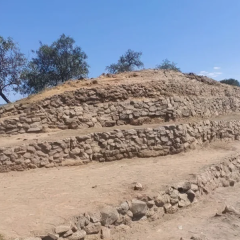
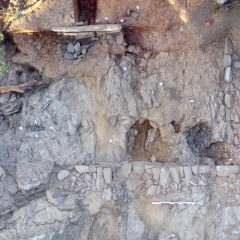
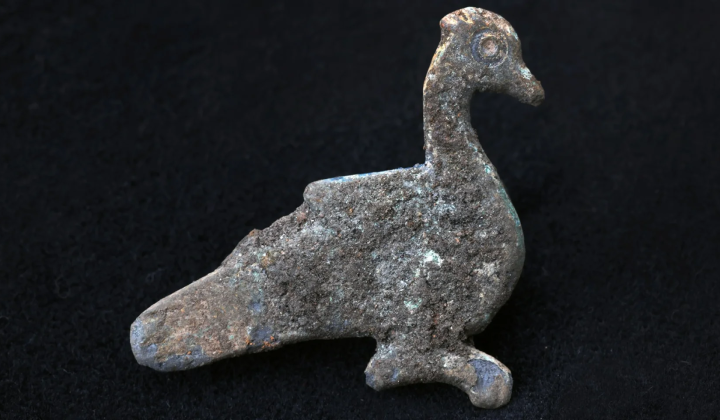
According to НВ — Техно: In the Swiss canton of Ticino, archaeologists uncovered the remains of a Roman-era building dating back to the 2nd and 3rd centuries AD in Ligornetto. Excavations that began in June 2023 covered an area of approximately 500 square meters and revealed not only the building’s foundations but also a bronze fibula shaped like a bird, metalworking traces, and an ancient roadway. These findings highlight the region’s vibrant historical activity during Roman times.
The uncovered structure measures 8 meters wide and 11 meters long, containing at least six rooms. It was constructed atop the site of an earlier wooden building from the 1st century BC, which was later dismantled. In the 2nd century AD, the wooden structure was replaced with a stone building that underwent modifications between the 2nd and 3rd centuries. A roughly 3-meter-wide portico faces south, overlooking the road. The building was ultimately abandoned after a destructive fire in the 3rd century, with charcoal and remnants of the roof still preserved.
Evidence suggests the area supported both craft production and agriculture. Post holes and a pathway made from recycled bricks delineate the site, while the absence of hearths and domestic spaces indicates the building was not used for residential purposes. Layers from the 2nd and 3rd centuries yielded numerous iron slag and bronze-working debris, pointing to active metallurgical operations in the vicinity.
Historical Context and Significance
Settlement in Ligornetto dates from the early 2nd century BC through to the 10th century AD. During the Roman period, prominent families from Mediolanum (modern Milan) and Novum Comum (modern Como) are known to have lived in the area. A luxurious villa from that era was discovered just half a mile from the current site.
This discovery follows earlier 2026 excavations at Vindonissa, Switzerland, where remains of a Roman military camp including defensive structures, barracks, and a field forge were found. Among the artifacts uncovered were a gold aureus coin from Emperor Tiberius’s reign and a carnelian stone engraved with the figure of Victoria. These finds collectively underscore the strategic and cultural importance of this region in Roman history.
The Ligornetto site significantly enriches our understanding of Roman settlements in Switzerland, confirming that Ticino was a key hub for both craft production and military infrastructure. Together with previous discoveries, this archaeological work highlights the region’s crucial role in the development and maintenance of Roman territories.

Read also