Kirishi Oil Refinery to Regain Only 60% of Capacity a Month After Drone Strike

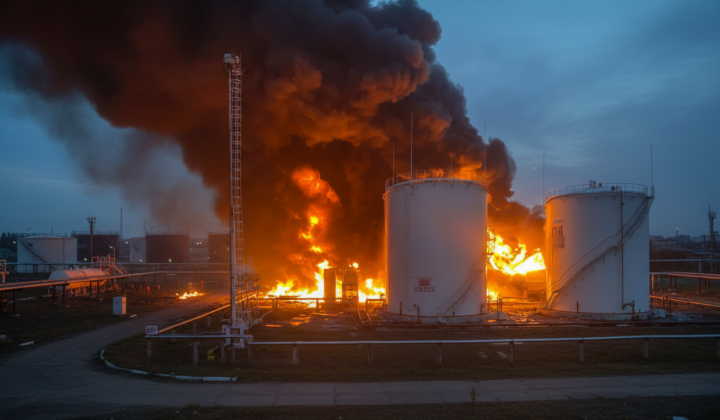
Drone Strike Hits Kirishi Oil Refinery
According to Главком: A Ukrainian drone attack on March 26 targeted the Kirishi oil refinery in Russia's Leningrad region, forcing the facility to halt operations. While a partial resumption of work is anticipated within a month, allowing for the production of motor fuel to restart, export operations will remain hampered due to damage inflicted on key port terminals. This refinery is a critical node in Russia's domestic fuel supply and export network.
Recovery plans aim to restart three of the plant's four primary processing units, representing approximately 60% of its total capacity. The Kirishi refinery, one of Russia's largest, has an installed capacity to process about 20-21 million tons of oil annually. In 2024, the facility produced:
- 2 million tons of gasoline,
- 7.1 million tons of diesel fuel,
- 6.1 million tons of fuel oil,
- 600 thousand tons of bitumen.
The plant accounts for over 6% of Russia's total oil refining volume.
Attacks on Oil Infrastructure
This incident is part of a broader Ukrainian campaign against Russian energy and logistics targets. Notably, on March 29, drones from the Security Service of Ukraine's (SBU) Special Operations Center "Alpha" struck an oil terminal at the port of Ust-Luga. This marked the fourth successful strike on Russian oil logistics in the Baltic region within a single week. According to Andriy Kovalenko,
“Russia has already lost nearly 40% of its monthly missile production and about 45% of its oil exports as a result of Ukrainian strikes on their facilities and logistics.”
Key Russian oil export ports on the Baltic, such as Ust-Luga and Primorsk, are facing severe operational challenges due to these sustained attacks, complicating the country's entire oil infrastructure situation.
These events highlight an escalation in the conflict, particularly in the realm of energy security. Strikes on Russia's oil infrastructure have the potential to significantly impact its economy, especially the volumes of oil exports that serve as a critical revenue source. Simultaneously, Ukraine's active measures in this domain underscore its aim to degrade Russia's capacity to wage war and bolster its own national security.
The situation at the Kirishi refinery underscores a wider trend affecting Russian oil exports, particularly in the Baltic region. As highlighted in recent reports, Ukrainian strikes on critical port facilities have led to significant disruptions, halting oil shipments and severely impacting Russia's overall export capabilities. Understanding these developments is crucial for grasping the broader implications for global energy markets.

Read also