Ukraine’s Strikes Force 2026 Russian Oil Output Forecast Downward

Outlook for Russia’s Oil Production
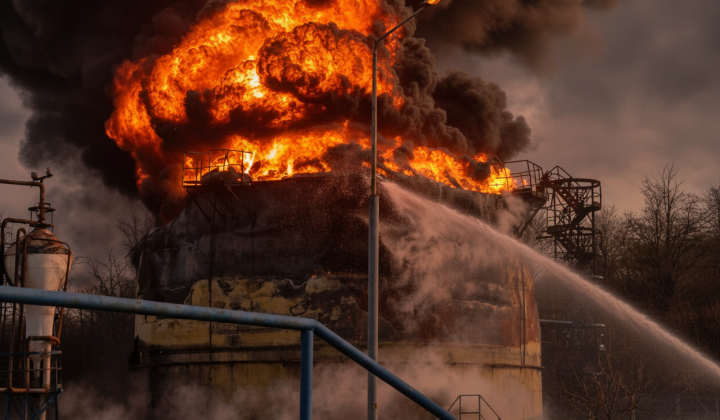
According to Главком: The International Energy Agency (IEA) has cut its 2026 forecast for Russian oil production by 200,000 barrels per day, bringing the new estimate to 8.95 million barrels per day. This adjustment follows Ukrainian attacks on oil infrastructure, which Ukrainian President Volodymyr Zelenskyy says have destroyed roughly 10% of Russia’s refining capacity. The IEA also noted that the damage to refineries will continue to suppress processing activity at least through the end of 2026.
Current Production Levels
In May, Russia’s crude oil output stood at 8.74 million barrels per day-about 5% lower than the same period last year. Additionally, May production fell 10% short of the monthly target. Russia has acknowledged a year-on-year decline of 460,000 barrels per day in April 2026.
Total exports of oil and petroleum products reached roughly 7.4 million barrels per day in May. Crude oil exports alone rose by 490,000 barrels per day year-over-year, hitting 5.2 million barrels daily. Revenue from oil exports in May totaled $20.8 billion-$710 million less than in April, but still a 65% increase compared to the same month the previous year.
Founded in 1974, the IEA comprises 31 member countries. The agency continues to monitor global energy markets and draw conclusions from available data. The downward revision of Russia’s oil production forecast could have significant implications for the global energy balance and future oil prices.
The reduction in Russia’s oil production forecast highlights the lasting negative impact of military operations on the country’s energy sector.
Volodymyr Zelenskyy, President of Ukraine
The loss of refining capacity and ongoing uncertainty about future developments could drive up international oil prices, affecting the economies of importing nations. Amid global energy instability, this information underscores the importance of monitoring the situation to understand fluctuations in energy markets.
The recent acknowledgment by Russia regarding the decline in its oil output marks a significant shift in the country’s energy narrative. This admission, the first of its kind since early 2026, highlights the growing challenges faced by the Russian oil sector amid ongoing geopolitical tensions. For a deeper understanding of the factors contributing to this decline, you can read more about it in our article on Russia's oil output challenges.

Read also