Russia admits to oil output decline for first time since early 2026

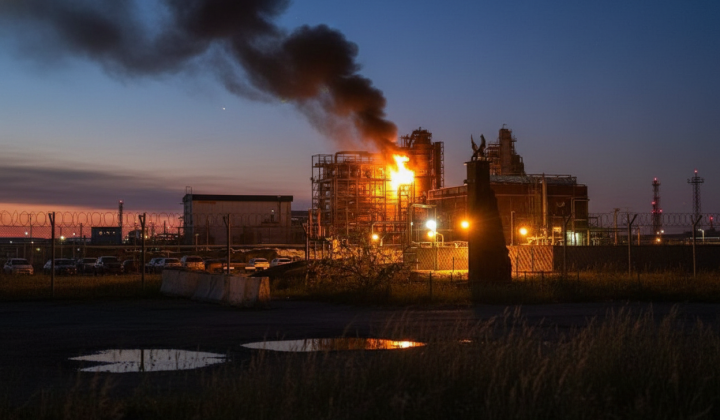
Russia's oil production challenges
According to Главком: For the first time since the start of 2026, Moscow has formally acknowledged a drop in its crude oil output. Deputy Prime Minister Alexander Novak confirmed the production decline, attributing it to unscheduled maintenance work at refineries. According to the International Energy Agency, Russia's crude production in April 2026 fell by 460,000 barrels per day compared to the same period last year, bringing the current daily output to roughly 8.8 million barrels.
Novak made the announcement at the St. Petersburg International Economic Forum, where he stated,
“current production is indeed slightly lower than it was at the beginning of the year”
and that “a number of our refineries are currently undergoing unscheduled maintenance.” He added, “we are, of course, using our export infrastructure at maximum capacity. Once the refineries return to full operation, production will increase and return to previous levels.”
Attacks on Russian facilities and their impact
In May 2026, Ukraine carried out at least 16 strikes on Russian fuel production sites, hitting eight of the country's ten largest refineries. To stabilize the domestic market, Russian authorities imposed a temporary ban on aviation kerosene exports. The restriction took effect on June 1, 2026, and will remain in place until November 30, 2026.
In Sevastopol, gasoline has been available only to emergency services since the night of June 3, 2026, highlighting severe fuel supply challenges in the region.
The decline in Russian oil output and the accompanying measures point to a strained energy sector. Export restrictions and attacks on key infrastructure signal growing risks to the stability of the country's energy system. These developments could significantly affect Russia's economic outlook and its position in international energy markets.
As Russia grapples with declining oil production, the impact of recent drone strikes on its refineries cannot be overlooked. These attacks have already led to the shutdown of several key facilities, exacerbating the challenges faced by the energy sector. For a more comprehensive understanding of these developments and their implications, see how spring strikes have affected oil refinery operations.

Read also