How Ukrainians Can Properly Replace the Calque 'Za Zamovchuvannyam'

Current Language Challenges in Ukraine
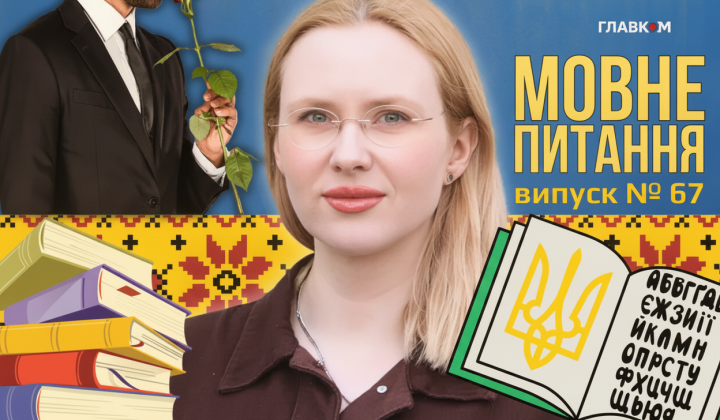
According to Главком: In a weekly column titled 'Language Matters' on the news site Glavcom, linguist Olha Vasylieva addresses pressing Ukrainian language issues. Her latest article explores alternatives to the calque phrase 'za zamovchuvannyam' (meaning 'by default'), proper usage of the particle 'bulo', the distinctions between 'obyraty' and 'vybyraty', and answers reader queries on translation and spelling.
The 'Language Matters' column appears every week on Glavcom. Readers can send their language-related questions to [email protected] with the subject line 'Language Matters'. Vasylieva notes that 'za zamovchuvannyam' is a direct calque from Russian. She identifies seven possible replacements:
- initial
- primary
- basic
- standard
- main
- typical
- established
Professor Oleksandr Ponomariv also suggested 'ustaleni' (established) and 'yak ustaleno' (as established).
Use of the Particle 'Bulo' and Terminology Nuances
The article also delves into the use of the particle 'bulo'. According to the Dictionary of the Ukrainian Language (SUM-20), the word 'buty' has a 13th meaning-'only bulo, as a particle'-to indicate an action that began but was not completed. A 14th meaning describes an irregularly repeated action. Vasylieva points out that philologist Volodymyr Romanets mistakenly equated the particle 'bulo' with the parenthetical word 'bulo'. Romanets opposed using 'znakhodytys' (to be located) in the sense of 'perebuvaty' (to be present), 'prodovzhuvatys' (to continue) instead of 'tryvaty' (to last), and 'zaymatys' (to engage) outside the meaning 'to ignite'. He advocated using 'rozibratys' (to undress) rather than 'osyahnuty' (to comprehend).
The article further examines the meanings of 'vybraty' and 'obyraty'. 'Vybraty' carries an additional sense of 'to pull out', while Ukrainian uses the terms 'obranets' and 'obranka' (male and female chosen one), with 'vybranets' and 'vybrankas' being incorrect. Vasylieva emphasizes that phrases like 'pokinchiv zhyttya samogubstvom' (committed suicide) and 'vtratyv svidomist' (lost consciousness) are calques from Russian.
Terminology questions are also crucial. The official term for 'rubayuchyy udar nohoyu' (chopping kick) is 'diahlonalnyy udar nohoyu' (diagonal kick). Both 'feminatyv' and 'feminatyv' are correct. The word 'zhyholo' (gigolo) originates from Italian (gigolò), while 'alfons' comes from French (based on Dumas' play 'Monsieur Alphonse'). Krymsky's dictionary lists 'kupovanyy kohanets' (bought lover), and Hrinchenko's dictionary includes 'babyn smyk' (a term for a gigolo).
The article also covers translations of certain words. 'Navskydku' (at a glance) translates to 'navskyd' in Ukrainian, and 'ponaroshku' (pretend) becomes 'ne naspravzhky'. The word 'znechulennya' (numbing) comes from Polish (znieczulenie) and is used six times less often than 'znebollennya'. SUM-20 records 'znechulyty' with the meaning 'to deprive of sensitivity or pain; to anesthetize, to numb'.
Vasylieva concluded: 'Let's learn the language together, speak and write correctly!'
Discussions about language nuances in Ukraine are vital for preserving and developing the Ukrainian language, especially amid modern challenges. Focusing on correct terminology and avoiding calques from other languages underscores the need to foster linguistic awareness among citizens. This weekly column serves as a platform to enhance language education and literacy, which is particularly relevant in the context of national identity.
In addition to exploring language nuances, understanding cultural implications is equally important. For instance, the term used to describe individuals seeking the services of sex workers can reveal societal attitudes and historical contexts. To delve deeper into this aspect of language and its reflections on society, you can read more about the linguistic exploration of such terms here.

Read also