A Polish Vision for Ukraine's Future in 1930

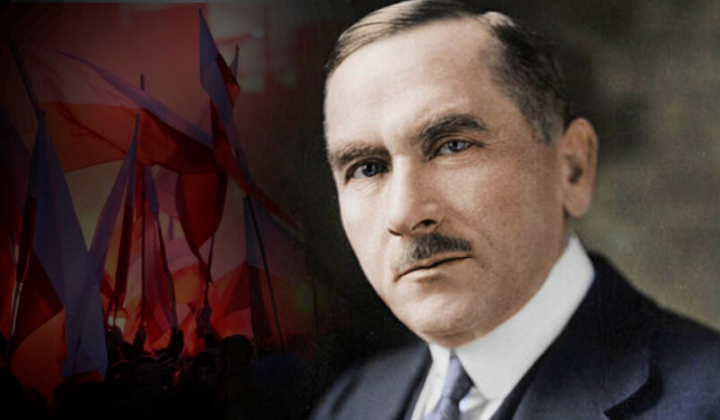
Roman Dmowski's Analytical Perspective
According to ХВИЛЯ: In his 1930 analytical piece 'The Ukrainian Question,' Roman Dmowski-a Polish statesman and co-founder of the 'National Democracy' movement-frames the Ukrainian national movement as an instrument of German geopolitical strategy aimed at weakening both Russia and Poland. He argued that an independent Ukraine would inevitably become a German protectorate and should therefore be excluded from Polish foreign policy considerations. This view was shaped by the turbulent interwar period, when the map of Eastern Europe was being violently redrawn.
A signatory of the 1919 Treaty of Versailles, Dmowski regarded Germany, not Russia, as the principal threat to Poland. He championed an ethnically homogeneous Polish state, opposing the federalist concept promoted by Józef Piłsudski. In his analysis of the Ukrainian national project, Dmowski emphasized its lack of an organic foundation, citing the heterogeneity of the Little Russian region.
Historical Context and Key Arguments
To support his thesis, Dmowski pointed to several pivotal events:
- The 1918 Treaty of Brest-Litovsk, where the Ukrainian People's Republic made peace with the Central Powers;
- Poland's 1920 Kyiv offensive;
- The 1921 Treaty of Riga, which established borders between Poland and Soviet Ukraine.
Dmowski contended that separating Ukraine from Russia would deprive the latter of its fertile black-earth farmlands, the coal of the Donets Basin, iron resources, and access to Caucasian oil.
A central pillar of his argument was the conviction that an independent Ukraine would inevitably fall under dominant German influence.
“An independent Ukraine would be a state dominated by German influences. [...] With a Ukrainian state in existence, Poland would find itself sandwiched between Germany and a sphere of German influence-one could say, a German protectorate. There is no need to illustrate vividly what it would then look like.” – Roman Dmowski.
The article examines various facets of the Ukrainian issue within the context of global politics and the feasibility of an independent Ukrainian state, noting that the question remains relevant and merits continued analysis.
Dmowski's analysis is crucial for understanding the historical context of the Ukrainian national movement and its impact on relations between Poland, Ukraine, and Germany. His arguments reflect the fears of the Polish political elite regarding potential German dominance in Eastern Europe and highlight the challenges faced by national movements within the machinations of global power politics. These ideas retain their relevance today, as the Ukrainian question once again commands intense international focus.
Dmowski's perspective on Ukraine's role in Eastern European geopolitics highlights the complex interplay of national movements and foreign influences during the interwar period. For a deeper understanding of the contemporary implications of these historical dynamics, explore how Russia's recent diplomatic maneuvers reflect a continuation of such strategies in the region.

Read also