Bracelet and Roman Silver Denarius Discovered at Polish Site

Archaeological Finds in Poland
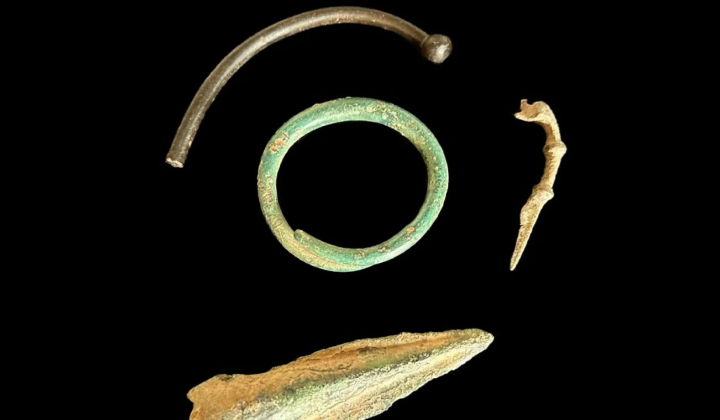
According to НВ — Техно: In mid-August, a search team known as the Bats made multiple discoveries near the village of Miesce in Poland. The recovered items, taken from agricultural soil that had been disturbed, include:
- a Roman silver denarius
- a bronze bracelet
- a metal spearhead
- a fragment of a fibula
- a possible piece of a necklace
These artifacts are slated to be handed over to the relevant authorities for further examination, dating, and conservation.
Significance of the Discoveries
The Roman denarius is a silver coin that served as one of the principal units in Rome's monetary system. It was first struck during the Roman Republic and remained in use throughout the Roman Empire. Roman coinage circulated well beyond imperial borders through trade, diplomatic gifts, military pay, and other forms of contact. However, the precise age and the specific emperor or figure depicted on this coin have not yet been determined.
Among the other finds, the bronze bracelet shows a green patina typical of corroded copper alloys. The metal spearhead emerged from the plowed agricultural layer, and its exact date still requires expert evaluation. Fibulae-ancient fasteners or brooches-were both practical clothing items and decorative ornaments, and they serve as valuable chronological indicators for archaeologists. The likely necklace fragment further enriches this collection of artifacts.
Aside from the recent Miesce discovery, an earlier excavation in the village of Szczawne, located in the Eastern Lemkivshchyna ethnographic region of the Podkarpackie Voivodeship, uncovered a World War I cemetery. That site contains the remains of roughly fifty soldiers who perished during the Carpathian campaign of 1914–1915. Researchers from the Jagiellonian University in Kraków exhumed more than twenty graves belonging to soldiers of the Austro-Hungarian, Russian, and German armies.
Together, these artifacts and the cemetery serve as important witnesses to the region's history and require continued investigation and preservation for future generations. The Bats search group remains active in exploring historical objects and their meaning.
These finds reflect a rich cultural and historical background, indicating that the area stood along significant trade routes and military paths. Studying such objects can yield fresh insights into how different societies interacted in the past and clarify the socioeconomic conditions of those times. In Poland, such discoveries are typically reported to authorities, helping ensure proper documentation and research. This kind of research also underscores the need to protect archaeological heritage for both scholars and the wider public.
In addition to the intriguing finds at Miesce, similar archaeological activities are shedding light on the region's rich history. Recently, a remarkable discovery was made during a railway overhaul in the Czech Republic, where a significant Bronze-Age hoard was unearthed. This find not only highlights the ongoing importance of archaeological work in Central Europe but also offers valuable insights into the past. For more details on this fascinating excavation, visit this article.

Read also