Scientists Uncover Why Gold Never Rusts


The Mystery of Gold's Resistance to Rust
According to НВ — Техно: Photo: pexels.com
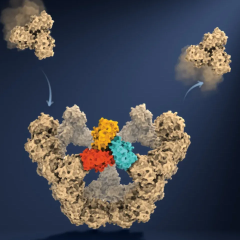
Gold’s remarkable ability to resist tarnishing has long intrigued scientists. A study from Tulane University now reveals the secret: after sustaining damage, gold’s surface undergoes a reconstruction, forming a dense hexagonal pattern. This unique arrangement blocks oxygen molecules from splitting, which in turn prevents the oxidation process from starting. On this reconstructed surface, the rate of oxidation slows down by a factor of one billion to one trillion.
Research and Findings
The research was carried out by computational chemists Santu Biswas and Matthew Montemore, who employed quantum-mechanical simulations. These simulations examined how oxygen molecules behave on two different types of gold surfaces:
- a reconstructed surface
- a non-reconstructed surface
When a fresh cut appears-such as a scratch or a slice-the outer atoms of gold rearrange into a tighter, hexagonal pattern. On this reconstructed surface, oxygen molecules cannot split sufficiently to trigger oxidation. In contrast, a non-reconstructed surface, with its square atomic arrangement, provides oxygen with the opportunity to split.
Since the 1980s, it has been known that gold nanoparticles can catalyze reactions more effectively than bulk gold. The researchers suggest that small particles may not have enough time or ability to fully transition into the reconstructed state.
“Just how much more reluctantly reconstructed gold oxidizes was truly surprising,” noted Matthew Montemore.
This discovery also sheds light on the catalytic properties of gold nanoparticles and could have significant implications for scientific and industrial applications.
This study highlights the importance of understanding the physical and chemical properties of materials like gold for advancing new technologies. For instance, the findings could be applied in industry to develop more efficient catalysts that reduce energy consumption and boost the productivity of chemical reactions. This, in turn, could impact a wide range of fields, from environmental technologies to medical applications.

Read also