Simulations for the European XFEL Accelerated 50-Fold by New Technique

A Breakthrough Approach to Speeding Up Computer Simulations
According to НВ — Техно: A research team has unveiled a novel method that dramatically accelerates computer simulations used to analyze X-ray scattering experiments at the European XFEL-achieving a 50-fold increase in speed. This advance holds promise for advancing studies in fusion energy and laboratory astrophysics. By leveraging a mathematical transformation into imaginary time, the technique enables more efficient investigation of matter under extreme temperatures and pressures.
Why the European XFEL Matters
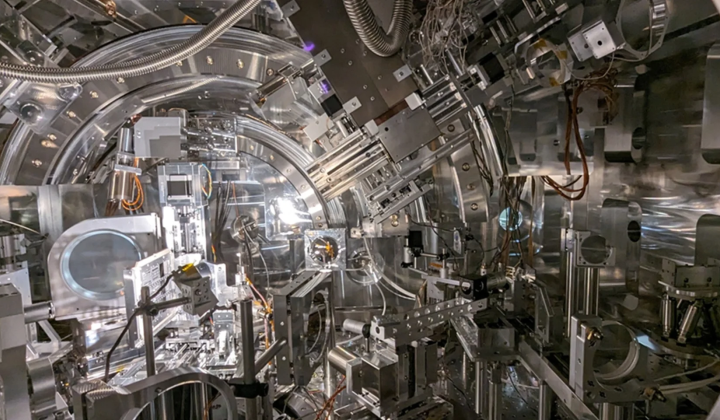
Located near Hamburg, the European XFEL is a key scientific facility for exploring material properties under extreme conditions. Dr. Tobias Dornheim, head of the High Energy Density Physics department at the HZDR Institute of Radiation Physics, explained:
“If we want to build a fusion power plant, we need to understand what actually happens in such extreme states of matter.” - Tobias Dornheim
He added that the new method allows for “comprehensive and precise analysis of data sets obtained during such experiments.”
Researcher Moldabekov also highlighted that tests showed simulations running 50 times faster. He stressed the method’s significance, stating:
“Our method can be turned into a standard tool for interpreting modern X-ray experiments.” - Moldabekov
According to him, the approach could “play a central role in the study of extreme states of matter” in the future.
This new technique was developed within the HIBEF consortium, which brings together scientists for joint data analysis and experiments. Its implementation could open new frontiers in understanding physics under extreme conditions, marking an important step forward for fusion energy and laboratory astrophysics.
The adoption of this method in European XFEL research could significantly impact progress in fusion energy, one of the most promising alternative energy sources. Studying extreme conditions, such as high temperatures and pressures, is critical for understanding the processes at play in fusion reactions and for developing new technologies. Research in this area could ultimately lead to the creation of efficient and safe fusion power plants.
In addition to advancements in simulation techniques, recent breakthroughs in neuroscience have also made headlines. For instance, German researchers successfully demonstrated the ability to freeze and revive brain tissue, showcasing the potential for innovative medical applications. Such developments not only enhance our understanding of extreme conditions in physics but also open new avenues in biological research.

Read also