Brainless Slime Mold Solves Mazes Using Physics, Scientists Reveal

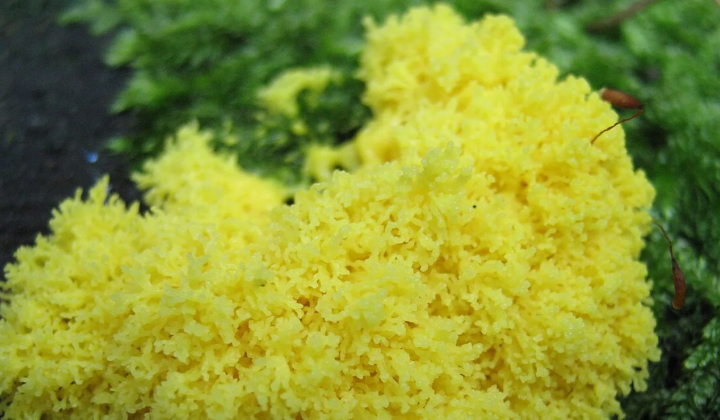
Study of Physarum polycephalum Slime Mold
According to НВ — Техно: New research shows that the slime mold Physarum polycephalum navigates mazes and locates food through physical and hydrodynamic processes, not conscious decision-making. Led by Lisa Schick, scientists at the Technical University of Munich discovered that the organism breaches a light barrier at the longest internal axis of a geometric shape, driven by hydrodynamic pressure. This single-celled organism, which lacks both a brain and a nervous system, challenges traditional assumptions about intelligence and problem-solving in biology.
In the experiments, researchers placed slime molds inside agar jelly traps, with boundaries illuminated by blue light at a wavelength of 470 nanometers. Shadow zones within the light barrier were shaped as two-dimensional figures, including triangles, squares, and hexagons. The organism began extending exploratory projections within just one hour of the experiment's start.
Significance of the Findings
A key discovery was that the light barrier was always breached at the point corresponding to the longest internal axis of the geometric shape. This breakthrough is explained by hydrodynamics and peristaltic contractions of the cell walls. The findings were published in the journal PRX Life, underscoring their importance for understanding slime mold behavior and broader biological navigation.
These results could fundamentally change how scientists view the mechanisms behind spatial navigation in organisms that lack complex nervous systems. The study of Physarum polycephalum opens new scientific horizons and may have practical applications across various fields.
The discoveries from this research may significantly impact the study of spatial orientation, not only in slime molds but also in other organisms without sophisticated neural networks. This could offer fresh insights into how different species have evolved adaptations to their environments.
Research on Physarum polycephalum may also be applied in practical areas, such as:
- Developing new algorithms for robotics;
- Optimizing transportation systems in situations where traditional approaches are ineffective.

Read also