Iran Conflict: How the IRGC Survives and Poses a Global Oil Threat via the Strait of Hormuz

The Situation in Iran
According to ХВИЛЯ: A US-Israeli military operation against Iran has now been ongoing for two and a half weeks. While initial strikes succeeded in destroying Iran's civilian government, the Islamic Revolutionary Guard Corps (IRGC) has managed to preserve its structural integrity and combat readiness. The IRGC's decentralized structure, featuring autonomous regional units, gives it the capability to blockade the Strait of Hormuz, a move that would threaten global oil supplies. This strategic waterway is a vital chokepoint for roughly one-fifth of the world's traded oil.
Expert Analysis
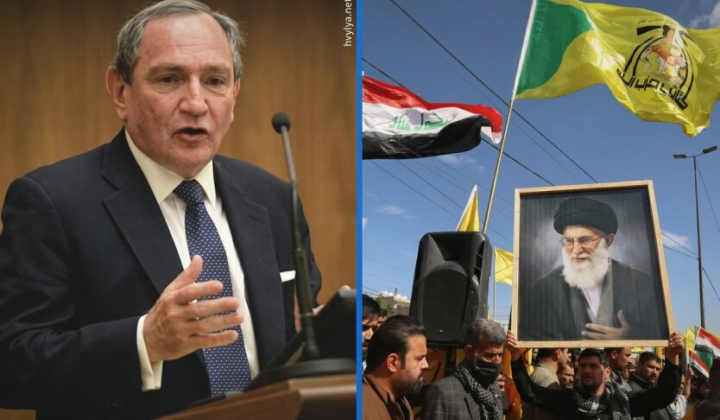
George Friedman, founder of the analytical firm Geopolitical Futures, observes that the IRGC has proven far more resilient than anticipated, forcing the United States to reconsider its next steps in the war amid new challenges.
“Iran has turned out to be far more resilient than expected, and the question now facing the United States is: how to continue this war based on the reality they have encountered.”
A critical problem has been a US intelligence failure regarding Iran's power structure. Friedman notes that
“the misunderstanding of Iran was a systemic failure,”
as the intelligence community failed to properly assess the situation and the military worked with an oversimplified war model. This has created a dilemma over the potential need to deploy ground troops, despite prior commitments to avoid such entanglements in the Eastern Hemisphere.
The IRGC is believed to possess approximately 400 kilograms of enriched uranium, raising nuclear proliferation risks. Friedman highlights the difficulty of neutralizing this 'vast, dispersed force' when its command is not held by a formal government but by the IRGC itself. He also points to the existence of the secular Artesh army, which was not targeted by US forces and has not participated in the resistance, suggesting it could become a potential tool for the United States if properly motivated.
The situation at the Strait of Hormuz remains critical, as its closure could trigger a global economic crisis.
'But in a horizon of one-two-three months, if the Strait of Hormuz is not opened, we will face a fundamental problem,'
Friedman states. The question of the IRGC's resources is also open:
'The key question now is: does the IRGC have the resources to continue the fight?'.
Consequently, the situation in Iran remains tense, presenting numerous challenges for the United States, which must adapt its military strategies to new realities. The ongoing operation jeopardizes not only regional security but also the world economy, as any action affecting the Strait of Hormuz has the potential to cause a global crisis. The next steps taken by the US could determine not only Iran's fate but also the stability of energy markets worldwide.
The ongoing military conflict in Iran has not only led to a significant shift in power dynamics but has also raised concerns about the security of global oil supplies. With the IRGC's control over the Strait of Hormuz now in jeopardy, the situation is further complicated by reports of Iranian mines obstructing this crucial waterway. These developments have resulted in a drastic increase in oil prices, underscoring the urgent need for a detailed understanding of the region's geopolitical landscape. For more insights into how these mines are affecting oil exports and prices, read our article on the impact of Iranian mines in the Strait of Hormuz.

Read also