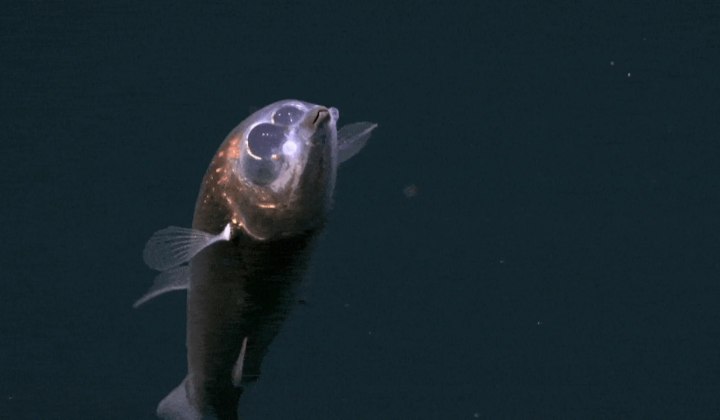
710 Meters Down: First-Ever Footage Captures a Telescope Fish in the Deep Ocean

Exploring a Mega-Transform Fault Zone
According to НВ — Техно: On July 9 at 1:30 PM, scientists aboard the research vessel Falkor launched a groundbreaking survey of a massive, calm transform fault zone spanning roughly 60,000 square kilometers. Using the submersibles SuBastian and The Childlike Empress, the team explored this area along the Mid-Atlantic Ridge.
Key Discoveries from the Expedition
For the first time in history, researchers filmed a Winteria telescopa fish-commonly known as a telescope fish or binocular fish-at a depth of 710 meters. This observation marks a major milestone in understanding deep-sea ecosystems. Additionally, at 3,634 meters below the surface, the team encountered a bigfin squid from the genus Magnapinna on two separate occasions. These sightings highlight the remarkable diversity of life thriving in the ocean's depths.
During the expedition, two previously unknown hydrothermal vent fields were discovered at nearly 4,000 meters deep. These fields are powered by serpentinization-a chemical reaction between seawater and the mineral peridotite. This process generates heat and hydrogen, creating ideal conditions for unique ecosystems that include:
- shrimp
- crabs
- anemones
Large-scale research like this opens new frontiers in understanding ocean biodiversity and the critical role hydrothermal systems play in marine life.
This expedition represents a significant scientific achievement, as hydrothermal fields are essential for sustaining life in deep-ocean ecosystems. Not only do they provide food for countless species, but they also serve as indicators of environmental changes in the sea. Creatures like Winteria telescopa and Magnapinna remind us how little we still know about the ocean depths and their inhabitants, paving the way for exciting future research.
As researchers continue to unveil the mysteries of deep-sea life, the recent capture of the telescope fish is reminiscent of another significant discovery in marine biology. Just as the first-ever footage of a living goblin shark in its natural habitat shed light on elusive species, these findings from the Mid-Atlantic Ridge further emphasize the importance of exploring our oceans. Each new observation not only expands our knowledge but also highlights the fragile ecosystems that thrive in the depths.

Read also