First-Ever Video Footage Captures a Living Goblin Shark in the Wild

Goblin Shark Discovery
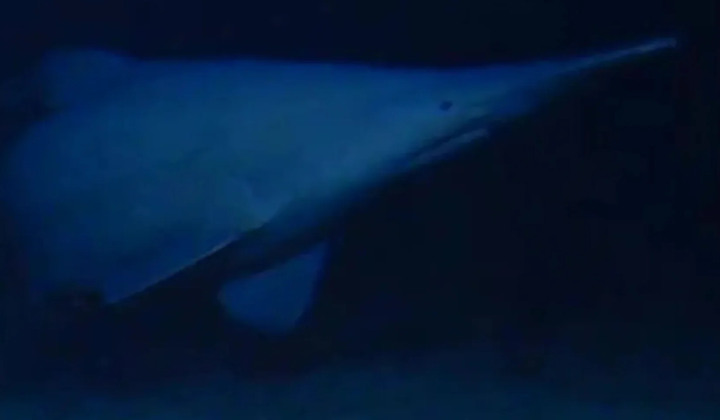
According to НВ — Техно: For the first time in history, researchers recorded live video of a goblin shark (Mitsukurina owstoni) in its natural habitat on June 22, 2024. The sightings occurred near Jarvis Island and in the Tonga Trench, expanding the known range of this species to the central Pacific Ocean and depths of nearly 2,000 meters. These findings are significant for understanding biodiversity in deep-sea ecosystems.
The goblin shark has existed for approximately 125 million years. Two specimens were documented during the study:
- One was found near Jarvis Island in the south-central Pacific Ocean.
- The other was located in the Tonga Trench, situated in the southwestern Pacific Ocean.
The shark from the Tonga Trench was discovered at a depth of roughly 2 kilometers, which is 700 meters deeper than any previously recorded goblin shark. The observation in the Tonga Trench took place in August 2024, while the Jarvis Island recordings date back to July 2019.
Research and Significance of the Discoveries
The Jarvis Island shark was likely a male measuring over 3.4 meters in length and more than 51 years old, found at a depth of 1,237 meters. Study participant Alan Jamieson remarked:
“The goblin shark is a charismatic deep-sea animal, and I never thought we would see one alive.” - Alan Jamieson
He also highlighted that during this expedition, over 50 days of continuous video were recorded at depths ranging from 800 to 10,800 meters, yet the observation lasted just over 20 seconds. “This shows how elusive this species is, and how special it is to have two sightings in one study,” Jamieson added.
Aaron Judah, another researcher involved in the study, stated:
“New discoveries like this demonstrate that there is still so much to explore in our deep ocean.” - Aaron Judah
He also noted the possibility of adding the goblin shark to the national biodiversity list due to its recently expanded geographic range.
These findings open new avenues for studying deep-sea ecosystems and underscore the importance of research in this little-explored area. The discovery of goblin sharks in new geographic zones is a crucial step in understanding their ecology and adaptations to deep-sea conditions. Such observations may have implications for the conservation of this species, as well as for expanding knowledge about the biodiversity of the Pacific Ocean and its ecosystems, which remain poorly understood. This highlights the need for further exploration in deep ocean waters, where new species and ecological connections may still be uncovered.
The discovery of the goblin shark is not the only remarkable find in the deep Pacific. Recently, researchers uncovered a unique coral species, often referred to as 'Chewbacca' coral, showcasing the incredible diversity of marine life in this unexplored region. Such findings highlight the ongoing importance of deep-sea exploration and the potential for further significant discoveries. For more on this intriguing coral and its implications for ocean biodiversity, visit the recent coral discovery.

Read also