How Ukraine's Supreme and Constitutional Courts Could Reshape Land Reform Rules

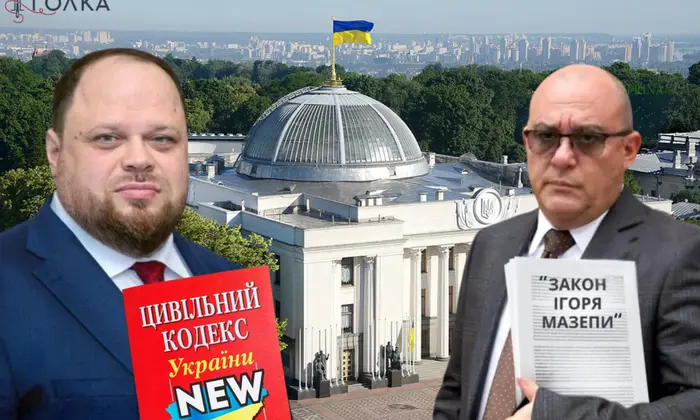
Analyzing Law 4292-IX
According to Главком: An examination of Law 4292-IX, commonly referred to as the 'Mazepa Law' after its author, MP Ihor Mazepa, reveals critical provisions affecting the state's ability to reclaim illegally seized land, including forests and coastal areas. Passed by parliament a year ago, the law mandates that a deposit equal to the market value of the disputed property must be paid for cases to be heard if the alienation occurred less than ten years prior. However, claims against those who seized forests and coastlines are nullified if the alienation happened over a decade ago. This law, which came into force in April 2025, was first applied in a case concerning Protasiv Yar in Kyiv. This legislation is part of Ukraine's broader, and often contentious, efforts to reform land ownership and combat corruption.
Supreme Court Ruling
The Supreme Court of Ukraine has addressed the issue of whether cases can proceed without the required deposit. Initially, the Kyiv Commercial Court dismissed a prosecutor's lawsuit due to the lack of a deposit. The Supreme Court later ruled that such cases should be heard without requiring state budget funds for the deposit. This decision was issued by the Commercial Court of Cassation, with judges Larisa Rohach, Yehor Krasnov, and Hryhorii Machulskyi presiding. A similar legal precedent was established by the Civil Court of Cassation, with judges Dmytro Hudyma, Iryna Dundar, Yevhen Krasnoshchokov, Vasyl Krat, and Pavlo Parkhomenko, in late 2025.
Law 4292-IX received support from nearly all parliamentary factions, except for the European Solidarity party, which abstained during the vote. One of the bill's co-authors, MP Ihor Frys, belongs to the Servant of the People faction. President Volodymyr Zelenskyy did not veto the law, despite a petition for its repeal supported by MPs including Ada Rohovtseva, Taras Topolia, Valerii Pekar, and Oleksandra Matviichuk.
Chairman of the Verkhovna Rada, Ruslan Stefanchuk, has proposed rewriting the Civil Code, which could lead to the legalization of all entries in the State Register of Property Rights. He stated:
"We are updating the rules by which the country lives"
- Ruslan Stefanchuk.
The Constitutional Court is currently reviewing a submission from the Supreme Court regarding the law's constitutionality. It has also ruled that by 2027, amendments must be made to the Law on the Prosecutor's Office concerning prosecutors' rights to defend state interests.
It is important to note that implementing this law requires significant additional expenditures from Ukraine's state budget, a major concern during wartime, as highlighted by the Office of the Prosecutor General. Lawyer Anton Dykan pointed out that
"the case was returned to the court of first instance. However, the unresolved issue of the ten-year statute of limitations remains"
- Anton Dykan. Olena Kryvoshei, head of a department at the National Agency on Corruption Prevention (NAZK), added: "We have provided recommendations, including to the government, to resume the work of the state land cadastre. Restoring cadastral data marks the end of the era of shadow land dealings." Oleksandra Kutsan, a defender of the Bilichanskyi Forest, noted that "behind the illegal seizure of forests or the floodplain of the Irpin River stands local government authority."
Law 4292-IX represents a significant step in the process of reclaiming illegally alienated land, but its implementation faces numerous challenges, including financial and legal hurdles. The issues of the mandatory deposit and the statute of limitations remain key factors that could impact the law's effectiveness. Simultaneously, the active stance of prosecutors and courts in hearing these cases indicates the state's intent to enforce the rule of law in land relations.

Read also