Record in the employment book about dismissal: at own request and by mutual consent


The record in the employment book about dismissal by mutual consent is a legal fact that records and confirms that the parties have ceased cooperation. Therefore, the record in the employment book about dismissal at own request is important, just like any other way to end common work.
The record about dismissal in the employment book must also be properly formatted (usually a sample of the record in the employment book about dismissal by mutual agreement is used). The correctness of the wording of such a record depends not only on the personnel order in the enterprise but also on the employee's further rights - in particular, regarding employment, calculating seniority, obtaining social guarantees and payments.
When making a record in the employment book about dismissal by mutual consent, special attention must be paid to the grounds for dismissal, as different wordings have different legal consequences. The most common options are dismissal at own request and dismissal by mutual consent. Each of these cases has its own peculiarities of registration and reflection in the employment book.
What is an employment book

An employment book is the main document about an employee's work activity, containing information about hiring, transfers to other positions, incentives, awards, and dismissals. It confirms the work experience and is used when assigning pension, social payments, and in other legal relationships related to work.
Despite the gradual transition to electronic accounting of labor activity, the paper employment book still has legal significance. Records in it are made according to established business rules. Each record must be accurate, without abbreviations, corrections, and arbitrary wordings. The wording of the grounds for dismissal must fully correspond to the text of the legislative norm to which the employer refers.
Maintaining employment books is the responsibility of the personnel service or the responsible person of the enterprise. All records are made based on the orders of the manager, not just the employee's applications.
The role of records about dismissal
The record about dismissal has special significance, as it confirms the termination of the employment contract and defines the legal grounds for such termination. The wording affects the perception of the reasons for dismissal by future employers, as well as the opportunity to receive unemployment benefits or other social guarantees.
For example, dismissal at own request is considered an initiative of the employee, while dismissal by mutual consent is a joint decision. If labor relations are terminated on the initiative of the employer, this may be due to staff reduction, violation of work discipline, or other grounds provided by law.
Therefore, the record must be clear, concise, and comply with the wording of the Labor Code of Ukraine. Any deviation from the established text may become grounds for dispute or the need for corrections.
Record about dismissal at own request

Dismissal at own request is regulated by Article 38 of the Labor Code of Ukraine. The employee has the right to terminate the employment contract by notifying the employer in writing two weeks in advance, unless otherwise provided by law or mutual agreement.
In the employment book, the record is made based on the corresponding order of the manager. The wording must be as precise as possible. For example: «Dismissed at own request, Article 38 of the Labor Code of Ukraine». If the dismissal occurred for a valid reason without the probationary period, this does not change the main wording but may be mentioned in the order.
The date of the record must correspond to the last working day of the employee. The order number and date are specified in a separate column of the employment book. After making the record, it is certified by the signature of the responsible person and the seal of the enterprise (if used).
Record about dismissal by mutual consent
Dismissal by mutual consent is provided for in paragraph 1 of part one of Article 36 of the Labor Code of Ukraine. In this case, the employment contract is terminated by mutual agreement of the employee and the employer, and the dismissal date is determined by the agreement of the parties.
In the employment book, the wording must fully comply with the legislation. Example of the record: «Dismissed by mutual agreement, paragraph 1 of part one of Article 36 of the Labor Code of Ukraine». It is not permissible to replace the wording with the phrases «by agreement» or «by mutual consent» if they do not correspond to the text of the article.
The peculiarity of such dismissal is that it is not considered the initiative of only one party. Therefore, this record is usually perceived neutrally and does not have a negative connotation for the employee. Registration is carried out based on the order issued after submitting a statement or concluding a written agreement.
Record about dismissal on the initiative of the employer

Dismissal on the initiative of the employer can occur on the grounds provided for in Articles 40 and 41 of the Labor Code of Ukraine. These include changes in the organization of production and labor, staff reduction, systematic non-fulfillment of employee duties, absences, and other grounds.
In the employment book, the record must clearly reflect the specific grounds with reference to the relevant article and paragraph of the law. For example: «Dismissed due to staff reduction, paragraph 1 of part one of Article 40 of the Labor Code of Ukraine». The wording must be precise and correspond to the order.
In such cases, the law often provides for additional guarantees, including severance pay or advance notice of dismissal for a certain period. All these conditions must be met before making the record.
How to properly make a record in the employment book
The record in the employment book is made on the day of dismissal. First, the sequential record number is entered, then the date, followed by the wording of the grounds for dismissal, and in the last column, the number and date of the order are indicated.
The wording must fully comply with the text of the law without arbitrary abbreviations. It is prohibited to use inaccurate or evaluative expressions. If a mistake is made, it is corrected by entering a new record declaring the previous one invalid.
After making the record, the employee is familiarized with it under signature in the appropriate journal of records of the movement of employment books. On the day of dismissal, the employment book is issued to the employee, and the employer makes the final settlement.
Samples of records in the employment book
What is being discussed:
- Dismissed at own request, Article 38 of the Labor Code of Ukraine. Order No. 45-k dated 10.03.2025.
- Dismissed by mutual consent, paragraph 1 of part one of Article 36 of the Labor Code of Ukraine. Order No. 52-k dated 15.03.2025.
- Dismissed due to staff reduction, paragraph 1 of part one of Article 40 of the Labor Code of Ukraine. Order No. 60-k dated 20.03.2025.
All the provided formulations must be reproduced without changes and correspond to the content of the issued order. Accuracy and compliance with legislation are the guarantees of the correct processing of the record in the employment book.
Mistakes in making records
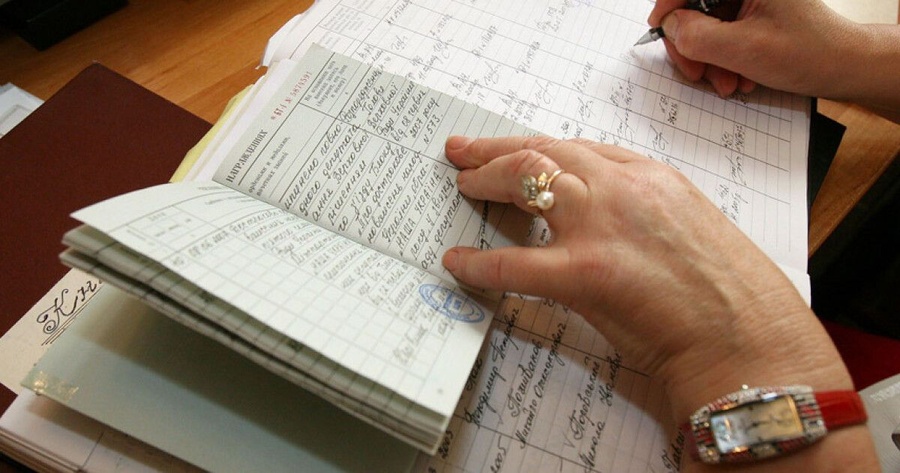
Most often, mistakes in the employment book arise from inattention or incorrect interpretation of the laws. One of the typical problems is inaccurate wording of the grounds for dismissal. For example, instead of a full reference to the article of the Labor Code, only a general phrase without a specific paragraph or section is mentioned. Such inaccuracies can create difficulties when confirming seniority or during document checks by social security agencies.
Another common mistake is the inconsistency of the record date with the actual dismissal date. The employment book must indicate the exact date defined as the last working day and fixed in the order. If the date is entered incorrectly or does not match the order, it may raise suspicions about the correctness of document processing.
Problems also arise when using abbreviations or arbitrary formulations. The law requires to clearly reproduce the text of the norm, without changes or rephrasing. For example, the record «dismissed at own request» or «dismissed by agreement» is incorrect as it does not correspond to the wordings of the law. Even slight deviations may become grounds for recognizing the record as improperly processed.
Sometimes personnel workers make technical mistakes: miss the sequential record number, incorrectly indicate the order number or date, sign in the wrong place, or fail to certify the record with a seal (if its use is provided). Such mistakes may seem insignificant, but further create the need for additional confirmation of seniority through archival references or legal proceedings.
It should also be noted that records made not on the day of dismissal but later are problematic. Violations of the deadlines for issuing the employment book and making records are grounds for holding the employer liable and calculating compensation for delays.
Correction of mistakes in the employment book
Correcting mistakes in the employment book is done according to established rules and cannot be carried out by crossing out or erasing the text. If an error is discovered, the previous record is not destroyed but recognized as invalid through the entry of a new record with the appropriate notation.
The procedure looks like this: in the next line the sequential number, the date of correction, and the wording «Record number ___ is invalid» are specified. After this, the correct record is made with exact wording and reference to the corresponding order. In the grounds column, the requisites of the document based on which the correction is made must be indicated.
If the mistake concerns the order requisites or date, the personnel service must check the primary documents to avoid repeated inaccuracies. In case of loss of the order or absence of archival data, corrections can be made based on an official certificate from the enterprise or a court decision.
If the enterprise is liquidated and the employment book contains an erroneous record, the employee has the right to contact the legal successor or the archival institution. If there is no possibility to document the correct data, the issue can be resolved in court.
It is important to remember that corrections must be clear and understandable. It is unacceptable to enter multiple wording options or leave questionable records. All changes are certified by the signature of the responsible person and, if available, the seal of the enterprise.
Peculiarities for different categories of employees
For certain categories of employees, the process of making records may have certain nuances. For example, special laws apply to civil servants or officials of local government bodies, which define the grounds for termination of service. In the employment book, the wording must be in accordance with the special legislation with reference to a particular norm.
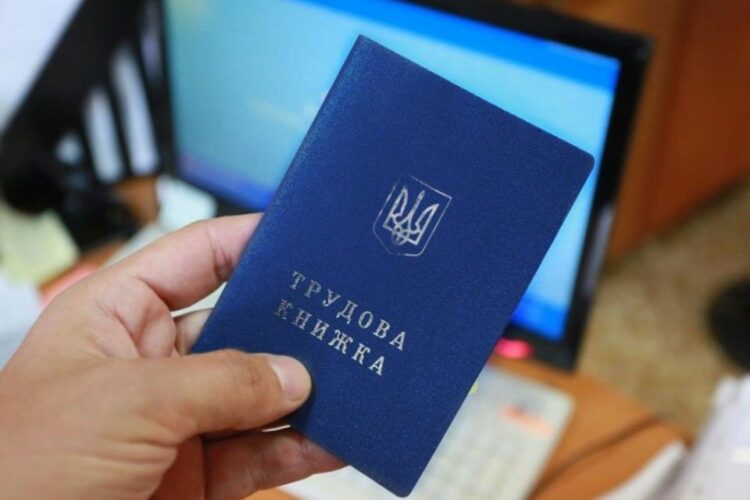
Regarding employees working under fixed-term employment contracts, it must be stated in the record that the employment contract is terminated upon expiration with reference to the relevant article of the Labor Code. The wording must reflect the legal grounds, not the circumstances that preceded the dismissal.
For employees working part-time, records are made at the main place of work. If a person is dismissed from part-time work, the relevant record may be made in the employment book based on a certificate from the part-time workplace.
Peculiarities also apply to minors. In the case of their dismissal, additional guarantees must be observed, and the grounds for dismissal must be specified as accurately as possible. Any inaccuracy may be regarded as a violation of labor rights.
As for employees who were on parental leave or sick leave, the record in the employment book is made on common grounds, but the dismissal date is determined according to the order and should not contradict the guarantees provided by law.
Thus, the correctness and accuracy of records in the employment book is a mandatory condition for the observance of labor rights of employees, regardless of their category. Any deviations from the established norms may lead to the need for additional confirmations of seniority or even legal disputes.

Read also