Skills, Not Seniority, Determine HR Professionals’ Salaries

Why Expertise Matters More Than Experience in HR Compensation
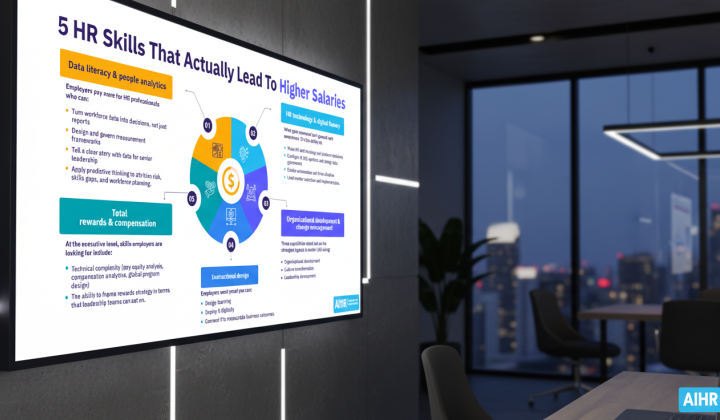
According to AIHR: According to a study by AIHR (Academy to Innovate HR), the earnings of HR professionals are driven more by specialized, in-demand skills than by years on the job. The analysis identifies data literacy, digital technologies, artificial intelligence, organizational development, instructional design, and compensation expertise as the most lucrative competencies. As routine tasks become increasingly automated through AI, employers are placing a premium on analytical and systems-thinking abilities.
Your income in HR depends not only on your experience but also on how rare your skills are. - AIHR
The research drew on data from 334 HR teams regarding AI readiness, as well as skill gap information from 961 HR teams and 13,665 individual HR professionals. In total, it covered 3.88 million HR practitioners and 162,000 active job postings. Findings reveal that only 60% of HR professionals feel confident working with data, and just 35% of HR teams believe they possess the skills needed to effectively leverage artificial intelligence.
Rising Demand for New Roles
Notably, demand for Organizational Effectiveness Specialists has surged by 65.4% over the past six months, while the need for Payroll Administrators has jumped 137.6%. Conversely, demand for HR Service Desk Agents has dropped by 38.3%. Salaries in the digital skills cluster range from $86,000 to $130,000. For instance, an HR Generalist moving into an HR Systems Analyst role can see a 44% salary increase, rising from $59,000 to $86,000.
- Transitioning from L&D Specialist to Head of L&D yields roughly a 50% pay bump (from $76,000 to $114,000).
- While 73% of HR professionals rate their business acumen highly, measured commercial literacy remains low.
- Only 8% of HR professionals begin their careers directly in the field.
AIHR emphasizes that 'the skills commanding the highest salary premiums in 2026 are those that most HR professionals have yet to develop.' The study notes that 65% of HR teams show strong support and advocacy for AI, while 30% have a clear strategic goal for its use. This underscores the growing importance of technology-related competencies and the need to cultivate them in order to stay competitive in the job market.
The AIHR research highlights the necessity for HR professionals to adapt to evolving labor market demands, particularly amid the increasing influence of artificial intelligence. The rising demand for organizational effectiveness specialists and payroll administrators signals transformative shifts in the industry-shifts that require new skills and knowledge. These changes create both opportunities for career advancement and challenges for those who fail to keep pace with rapid technological and market developments.
As the landscape of HR continues to evolve, understanding the role of technology is crucial for professionals looking to enhance their skills and boost their compensation. For insights on how to effectively integrate AI into HR practices, explore our article on strategies for AI implementation. This knowledge can help you stay competitive in a rapidly changing environment.

Read also