At the UN General Assembly, Zelensky Details Russia’s Heavy Losses, North Korean Troop Involvement, and AI Weaponry Risks

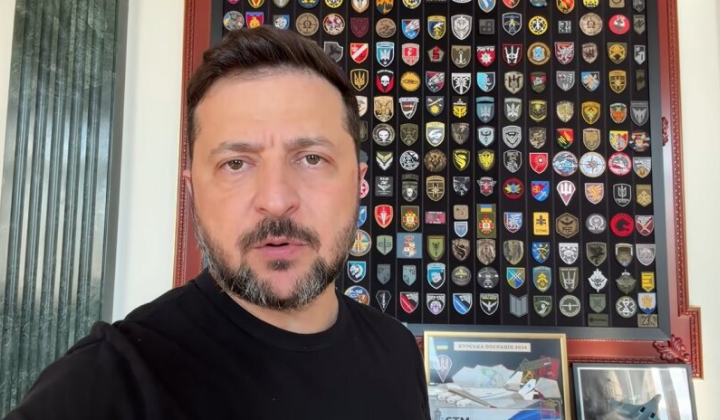
President Volodymyr Zelensky Addresses the 81st UN General Assembly
According to ХВИЛЯ: During the general debate of the 81st session of the United Nations General Assembly in New York, Ukrainian President Volodymyr Zelensky presented stark figures on Russia’s military casualties and territorial gains in Ukraine. He highlighted Russia’s extensive missile and drone attacks, the involvement of North Korean forces, Russia’s growing budget deficit, and the emerging dangers posed by artificial intelligence in warfare. Zelensky also urged countries whose citizens are fighting alongside Russian forces to take responsibility for their nationals.
Details on Russian Military Casualties and Operations
According to Zelensky, from January through August, Russian forces suffered losses exceeding 248,964 personnel. During the same period, Russia managed to seize just over 1,000 square kilometers of Ukrainian land. The Ukrainian president emphasized that the number of Russian fatalities surpasses the entire populations of 21 nations worldwide.
“Each of these losses is backed by video evidence,” he stated.
Despite Russia’s vast landmass of 17 million square kilometers, Zelensky pointed out that President Putin has expended approximately 248 soldiers for every square kilometer gained. He criticized Putin for repeatedly promising, now for the 17th or 18th time in five years, to capture the Donetsk region, claiming he only needs a few more months.
“This is probably the 17th or 18th promise he’s made over five years,” Zelensky remarked.
Zelensky further exposed Russia’s financial struggles, describing the country’s current budget deficit as the largest in recent history, with many Russian regions already facing bankruptcy. He revealed that Russia has launched over 2,100 missiles of various types into Ukraine since the beginning of the year, including more than 950 ballistic missiles.
“Even the wealthiest nations today cannot supply enough interceptor missiles – current production falls short,” he stressed.
Over eight months, Russia deployed 63,000 attack drones, of which over 7,700 were rocket-powered Shahed drones. Zelensky also raised concern about North Korea’s role, reporting that its leader has sent troops to bolster Russia’s military. He noted that North Korean soldiers are trained under conditions that demand they be prepared to die at any cost.
The Ukrainian president expressed deep worries about the rapid advancement of AI-based weaponry, urging a slowdown in the development of lethal autonomous systems.
“We need to decelerate the rapid proliferation of killing technologies before we reach the next stage,” he warned. Zelensky called for peace, emphasizing the real possibility that next year, decisions on the battlefield may be influenced not only by humans but also by artificial intelligence.
Zelensky also addressed representatives from 47 nations whose citizens are fighting alongside Russia, including Ghana, Nepal, Tajikistan, India, Yemen, Kenya, Zimbabwe, Cuba, Belarus, Sudan, and South Africa.
“I want to speak directly to each representative of these 47 countries: you know what Russia is doing to your people. These are your citizens. Take care of them and prevent them from being sent to another front,” he urged.
Through this address to the UN General Assembly, President Zelensky spotlighted critical facets of the ongoing conflict in Ukraine: the staggering losses suffered by Russian forces, Russia’s fiscal crises, and the involvement of foreign nationals in the war. His speech underscores the urgent need for global awareness of the conflict’s broad implications and calls for decisive international efforts to bring the fighting to an end.
In light of Zelensky's revelations about Russia's military setbacks and financial issues, the global response to the ongoing conflict remains critical. Notably, former President Trump has recently called for an end to the Russia-Ukraine war, prompting Zelensky to express willingness for dialogue. This development raises important questions about international diplomacy and the future of peace negotiations. For further insights on Zelensky's reaction and the implications of this potential meeting, read more about the proposed discussions in New York.

Read also