Archbishop Yurii Mykhnovskyi: Marking 160 Years Since the Birth of Kyiv's Last St. Sophia Cathedral Dean

The Life and Legacy of Yurii Mykhnovskyi
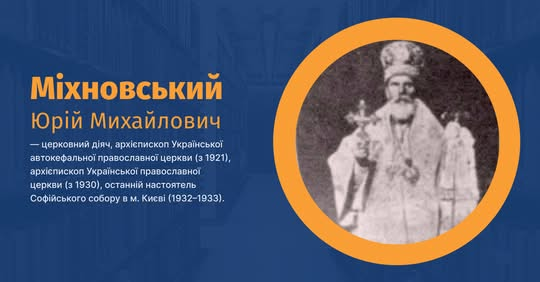
According to Велика українська енциклопедія: January 30, 2026, will mark 160 years since the birth of Yurii (Georgii) Mykhnovskyi, a prominent church figure who left a significant mark on the history of the Ukrainian Orthodox Church. Born in the village of Pishchane, now in the Zolotonosha district of the Cherkasy region, Mykhnovskyi came from a priestly family and belonged to the same lineage as Mykola Mykhnovskyi, an ideologue of Ukrainian nationalism. His life unfolded during a turbulent period for Ukraine, as the nation navigated complex political and religious transformations.
Mykhnovskyi completed his education at the Pereiaslav Theological School in 1880 and the Poltava Theological Seminary in 1889. He began his professional life as a second teacher at the Pishchane parish school. On October 14, 1889, he was appointed a psalm-reader at the Holy Trinity Cathedral in the village of Irkliiv, and on November 8 of the same year, he moved to a similar position at the Church of the Nativity of the Blessed Virgin Mary in the village of Domantove.
Archbishop and Enduring Influence
From 1921, Yurii Mykhnovskyi served as an archbishop of the Ukrainian Autocephalous Orthodox Church, and from 1930, as an archbishop of the Ukrainian Orthodox Church. He holds the distinction of being the last dean of the historic St. Sophia Cathedral in Kyiv, serving in that role from 1932 to 1933. Mykhnovskyi died in Kyiv on October 16, 1937, leaving behind a vital legacy in the history of the Ukrainian clergy.
Commemorating the 160th anniversary of Yurii Mykhnovskyi's birth is a significant moment for Ukrainian society, given his important role in the formation and development of the Ukrainian Orthodox Church. His legacy remains relevant in the context of contemporary challenges facing religious institutions in Ukraine. This anniversary provides an opportunity for a deeper study of his life and work, as well as for reflecting on the influence of church figures on Ukrainian national identity.

Read also