Climate Change Is Reshaping Travel Plans for 81% of Europeans

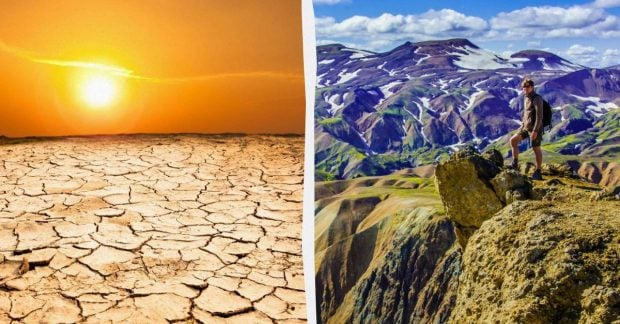
How Climate Change Is Shifting European Travel Preferences
According to УНІАН — Туризм: A recent study reveals that 81% of Europeans are altering their travel plans due to climate change. As global warming intensifies, demand for cooler destinations is rising, particularly in Northern and Eastern Europe. However, traditional tourism powerhouses like France and Spain remain the continent's most visited countries. New measures are being introduced to mitigate the effects of extreme heat, including the concept of noctourism and urban cooling systems.
Among those actively seeking cooler climates, 15% of Europeans are deliberately avoiding destinations prone to extreme heat. In May 2022, temperatures in Spain exceeded seasonal norms by 15°C, and in September 2023, a severe heatwave in France disrupted the Rugby World Cup. Such weather anomalies are becoming more frequent, as heatwaves now extend into other calendar periods.
Tourism Statistics and Adaptation to Climate Shifts
According to official data, France welcomed 102 million tourists in 2025, while Spain attracted 96.8 million. Italy, ranking fifth in visitor numbers, hosted 64.5 million travelers. Yet, due to changing climate patterns, destinations in Finland, Norway, Poland, and Iceland have seen double-digit growth in inbound tourism.
The UN Intergovernmental Panel on Climate Change notes that human activity is driving global warming, with Europe warming faster than any other continent. Extreme weather events, such as the deadly May heatwave in 2026, could significantly impact the tourism industry. As Alejandro Sáez Reale states,
“We are almost certain that it will get hotter and hotter in the coming decades. The impact on tourism-dependent countries could be enormous.”
To adapt to these new conditions, Seville, Spain, is implementing rainwater misting systems on its streets, while noctourism-nighttime travel-is being promoted from Rome's Colosseum to Athens' Acropolis. Studies also show that travelers are becoming more climate-conscious, despite the tension between exploring new places and the environmental costs involved.
Dr. Mehri Khosravi emphasizes that
“There is a perception that heat is desirable. Tourism behavior will have to adapt, and the key is raising awareness of the risks.”
Meanwhile, a representative from ABTA notes that 'overall, people continue to travel as they always have, enjoying Mediterranean destinations during the summer months,' with increased interest in cooler spots remaining more of an exception than the rule.
Given scientists' forecasts of the strongest El Niño in a decade in 2026 and Ukrainian meteorologists' predictions of comfortable summer weather in Ukraine that same year, the issue of climate change and its effect on travel preferences is becoming increasingly urgent. Adapting the tourism industry to these new realities will require efforts from all stakeholders, as climate shifts could profoundly reshape traditional travel routes and give rise to new travel trends.
As travelers increasingly seek refuge from the rising temperatures in popular destinations, it becomes essential to explore cool vacation spots to escape the heat. With a growing number of Europeans prioritizing cooler climates, understanding these alternative destinations can provide valuable insights for future travel plans.

Read also