Earth's Core Has Reversed Direction and Is Losing Strength, New Study Reveals

New Insights into Earth's Inner Core
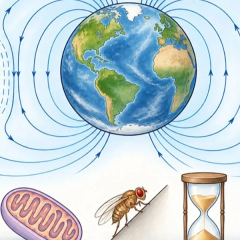
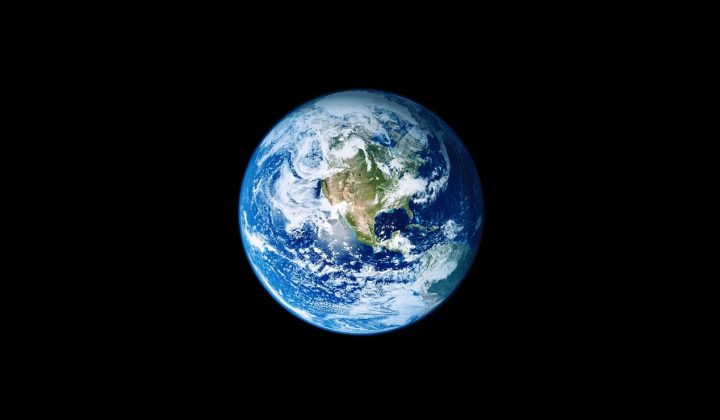
According to НВ — Техно: Located more than 5,100 kilometers beneath the surface, Earth's inner core is the focus of a groundbreaking study that challenges long-held assumptions about our planet's geological stability. In 2022, Professor John E. Vidale demonstrated that the inner core oscillates, shifting several kilometers every six years. This finding overturns conventional views that the deep layers of the Earth are immovable.
The research is carried out as part of the Swarm and Cryosat missions operated by the European Space Agency. Particularly significant results came in 2010, when scientists recorded a shift in the equatorial Pacific Ocean's current direction from west to east. Since early 2020, this eastward flow has been weakening, signaling possible changes in Earth's geological processes.
Connecting the Core to the Surface
Frederik Dahl Madsen, a researcher at the University of Edinburgh, notes: 'This powerful reversal coincided in time with processes occurring in the planet's deepest layers.'
This points to a strong link between changes in Earth's core and events on its surface. Elisabetta Iorfida, also involved in the study, emphasizes that 'the work refutes the idea that the Earth's interior is static and proves that regional changes in the core can happen extremely quickly, within just a decade.' This discovery has sparked keen interest among scientists, who continue to investigate the dynamics of the inner core.
Researchers reassure that despite the dramatic geological implications, such processes are natural. They are continuing to study these changes, which may have important consequences for understanding Earth's internal structure and its evolution.
These new findings could significantly reshape our understanding of geological processes and their connection to climate shifts on the planet's surface. Studying the inner core may help unlock mysteries that influence global geophysical phenomena, such as earthquakes and volcanic activity. Further research in this area could lead to new approaches for predicting such events, which is critical for reducing risks to populations and infrastructure.
As scientists delve deeper into the implications of these findings, the recent discovery of a change in flow direction beneath the Pacific Ocean adds another layer of complexity. This phenomenon may be closely linked to the ongoing shifts in the inner core, highlighting the intricate connections between Earth's interior and surface dynamics. For a more detailed exploration of how these changes manifest beneath the ocean, check out the article on the flow direction beneath the Pacific Ocean.

Read also