2600-Year-Old Etruscan Tomb Unearthed at Polledrara Necropolis in Italy

Discovery of an Ancient Etruscan Tomb at Polledrara
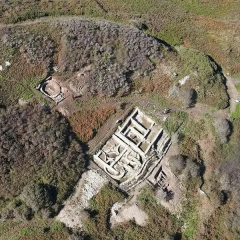
According to НВ — Техно: Archaeologists in Italy have uncovered a 2600-year-old Etruscan tomb within the Polledrara necropolis, near the ancient city of Vulci. Dating back to the late 7th century BCE, this burial site offers valuable insights into the customs and cultural practices of the Etruscan civilization.
The tomb features three burial chambers constructed from local volcanic nenfro stone blocks. Excavations are part of the international "Return to Vulci" project. Although the tomb suffered looting in the 20th century, a collapsed stone vault shielded many artifacts from destruction. Among the discoveries are:
- gold jewelry
- remnants of a war chariot
- weapons
- a rare piece of women's footwear
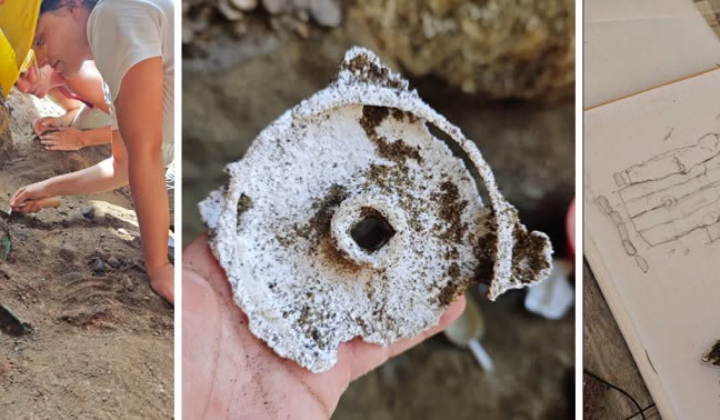
Researchers also uncovered imported Greek pottery from Athens and Corinth, black bucchero ceramics, iron spits, gold sheets, and intricately carved ivory. Remarkably, the damp soil preserved a leather women's shoe. Some side chambers contained a banquet set, which included:
- a bronze tripod with an alabaster lamp, likely from Egypt or Rhodes
- a wine grater
- ceramic bowls decorated in Eastern styles
Advancing Understanding of Etruscan Civilization
This find also sheds new light on the Isis Tomb first discovered by Lucien Bonaparte in 1839. After documentation, the site has been temporarily backfilled, with plans to resume excavations in 2027. The Polledrara discovery highlights the richness and diversity of Etruscan culture and renews scholarly interest in their history.
The unearthing of the Etruscan tomb at Polledrara marks a significant advance in exploring the cultural heritage of the Etruscans, who played a crucial role in shaping early Italian civilization.
The artifacts not only confirm extensive trade connections with other ancient societies but also open new avenues for studying Etruscan burial rituals and social organization. Future digs are expected to greatly enhance current knowledge about this ancient culture.
This remarkable discovery at the Polledrara necropolis not only enriches our understanding of Etruscan burial practices but also parallels recent findings, such as the unearthing of a fragment of the Goddess Uni’s antefix at the ancient Pyrgi sanctuary. Such discoveries collectively highlight the intricate connections within ancient Italian civilizations and their shared cultural heritage.

Read also