Ancient 5,000-Year-Old Palace Unearthed in Nanzuo Reveals 300 Years of Use Before Being Buried

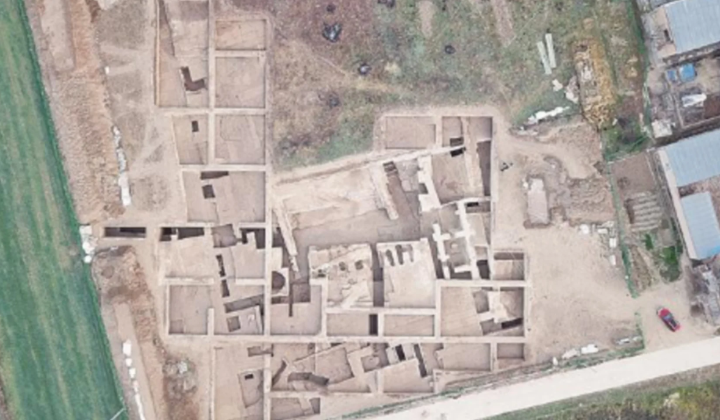
Discovery of a 5,000-Year-Old Palace in Nanzuo
According to НВ — Техно: Archaeologists have uncovered a remarkable palace in Nanzuo dating back 5,000 years that was in use for roughly three centuries before being deliberately covered over. This settlement, spanning approximately 6 square kilometers, thrived during the late Yangshao culture period, around 5100 to 4700 years ago. Evidence suggests that life in Nanzuo persisted for about 200 years after the palace was buried, with remnants of later buildings found above the covered complex.
Details of the Palace and Key Artifacts
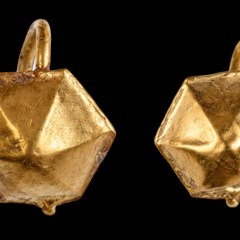
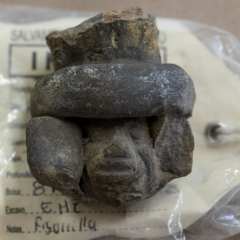
The palace, designated as structure F1, covers roughly 824 square meters and features a front hall connected to a larger rear hall by three passageways. Its thick walls are made of rammed earth and coated with white lime plaster. Inside F1, archaeologists discovered a circular hearth measuring 3.2 meters in diameter. Nearby, in a ceremonial building labeled F2, hundreds of white pottery jars, nine painted bottles, and a nearly 70-centimeter-tall vessel were found. Surrounding F2 were millions of charred rice grains and pig bones, indicating ritual or domestic activities.
Researchers emphasize that constructing such a complex would have required thousands of workers over several years.
“This is the earliest example of such architectural planning among China's prehistoric proto-capitals,” said archaeologist Zhang Xiaoning.
He further suggested that the ruling group may have relocated elsewhere, while some inhabitants possibly moved north, eventually contributing to the emergence of the Shimao center, although no direct evidence confirms this, according to Han Jianye.
Ongoing investigations will focus on the Nanzuo central area, the Dongzhi Plateau settlement, and the Malyan River basin, opening new avenues to explore the region’s ancient history.
This discovery is a major breakthrough for understanding the social hierarchy and cultural evolution of early China. It highlights the complexity of society and labor organization at the time, as well as religious and cultural practices in the region. Continued study of the palace promises to shed more light on the developmental stages of civilization here, potentially reshaping how scholars view interactions among ancient Chinese cultures.
As researchers continue to uncover the layers of Nanzuo's rich history, parallels can be drawn with another significant archaeological find in China. An extensive urban hub from the Han Dynasty was recently discovered in Sichuan, showcasing rare artifacts that shed light on urban life during that era. Such findings highlight the intricate web of ancient civilizations that once thrived in China, offering deeper insights into their cultural evolution.

Read also