Extensive Han Dynasty Urban Hub Unearthed in Sichuan Featuring Rare Artifacts

Major Archaeological Discovery in Sichuan Province
According to НВ — Техно: In Qu County, Sichuan Province, archaeologists have uncovered the remains of a sprawling urban center dating back nearly 2,000 years to the Han Dynasty. This significant site includes fortified city walls, streets, workshops, a dock, and bamboo manuscripts that shed light on local governance, education, and everyday life during that era. Among the discoveries is China’s earliest known Han Dynasty water lock, alongside numerous artifacts revealing iron production and cultural activities spanning from the Warring States period through the Qin and Han Dynasties. Additionally, a tomb believed to belong to Empress Huayan-grandmother of Qin Shi Huang-was found, containing hundreds of artifacts from diverse origins.
Excavation Details and Findings
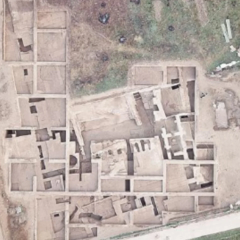
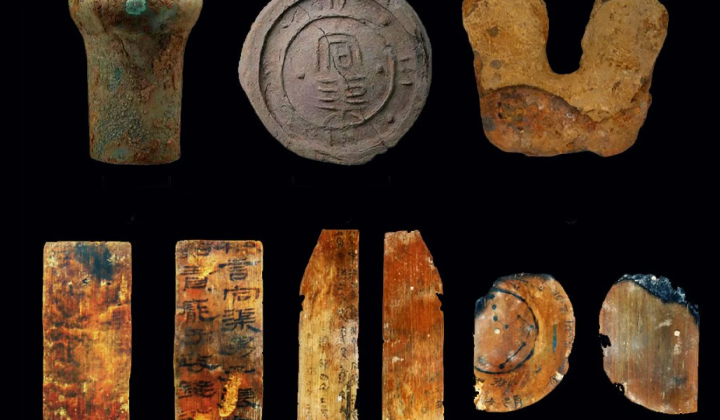
The digs are focused on the Chengba site, covering roughly 50,000 square meters. The city was once encircled by walls with gates and a moat, highlighting its strategic importance in ancient times. Excavations uncovered streets, building foundations, a cemetery, pottery workshops, and a riverside dock. The city walls date to the Western Han period, constructed between 202 and 141 BCE. Chengba represents the first Han Dynasty city discovered in eastern Sichuan, with inscribed roof tiles bearing the characters 'Dancui' identifying the settlement as the ancient city of Dancui.
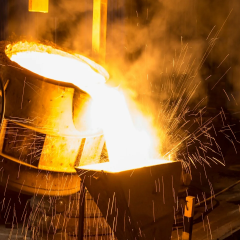
Among the remarkable finds is a dock on the Qujiang River, likely functioning as a combined land and water lock, the only known structure of its kind from the Han Dynasty in China. Bamboo slips found at the site cover topics such as finance, legal affairs, education, calligraphy, literature, mathematics, and household records. Excavators retrieved over 20,000 fragments of slag, furnace lining, and tuyères, indicating extensive iron production that radiocarbon dating shows persisted from late Western Han into mid-Eastern Han.
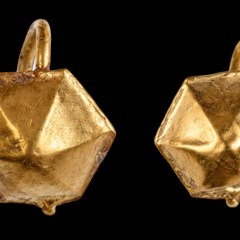
The site also yielded bronze artifacts, inscribed roof tiles, and a bronze musical instrument. Ritual bronze vessels and weapons date back to the Warring States period. The settlement was continuously inhabited from the late Warring States through the Qin and Han Dynasties, approximately from the 4th century BCE onward. Its strategic location between river routes and mountain passes made it a crucial communication hub connecting China’s Central Plains with the middle Yangtze region. The tomb, likely that of Empress Huayan, was uncovered near one of China’s major modern airports, containing hundreds of items crafted from ceramics, bronze, iron, jade, agate, and glass.
This discovery offers invaluable insights into the cultural and economic landscape of the Han Dynasty, illustrating the era’s complex social structures and technological advancements. The bamboo documents in particular promise to deepen understanding of ancient administrative systems and daily urban life. Ongoing research is expected to reveal further details about regional interactions across China during this pivotal historical period.
The recent findings in Sichuan not only highlight the architectural sophistication of the Han Dynasty but also echo the significance of imperial figures in ancient China. For instance, a similar discovery involving the tomb of Empress Huayan near Xi’an has provided further insights into the lives of prominent historical figures. To explore more about this remarkable archaeological site and its implications for our understanding of Chinese history, visit the ancient resting place of Empress Huayan.

Read also