Archaeologists Discover Remains of Eight Infants Near the House of the Dead in Çatalhöyük

Findings in Çatalhöyük
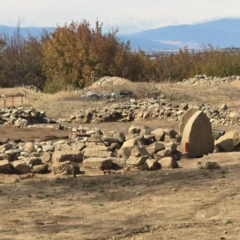
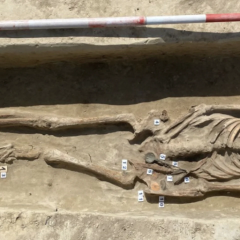
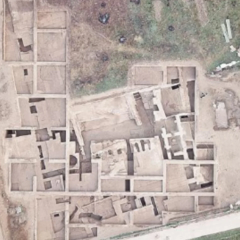
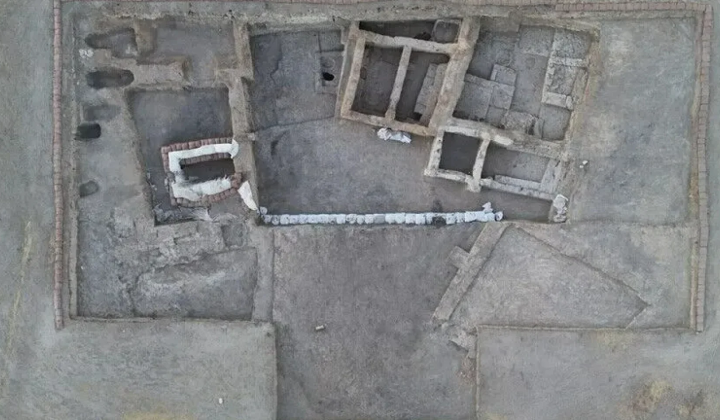
According to НВ — Техно: Archaeologists have discovered the remains of eight infants under six months of age in Çatalhöyük, Turkey, near a burial complex known as the House of the Dead. This find was made in the eastern part of the Eastern Mound, where a group of non-residential buildings, including Building 173 and Building 174, was uncovered towards the end of the existence of the Neolithic settlement. The research indicates a change in burial practices in this region, as previously the dead were buried beneath the floors of residential houses.
The House of the Dead and Its Significance
The House of the Dead, or Building 173, received its name after 18 human burials were found within its internal chambers. According to Professor Ali Ozan, who supervises the excavations, the burials were discovered in chambers connected to a structure located around an open area. Building 173 is interpreted as a crypt or mortuary and was not used as a regular residence, as confirmed by researchers from Adam Mickiewicz University in Poznań.
Adjacent to the House of the Dead, Building 174 was found, which contains platforms, benches, and decorated elements. Researchers have termed it unique, as similar structures have not been documented in the last three decades. Arkadiusz Martyniak described the eastern part of late Çatalhöyük as a non-residential quarter surrounding a large open plaza.
Çatalhöyük, located on the Konya Plain in central Turkey, is a UNESCO World Heritage Site with approximately 9000 years of history. It is estimated that during this time, up to 8000 people lived in the settlement. A study conducted in 2025 revealed that human remains were placed beneath the floors of houses and platforms. Adults were often buried under elevated platforms, while infants and very young children were concealed in a wider range of places within the houses. Most initial burials involved bodies in tightly curled positions in pits beneath the floors of residential buildings.
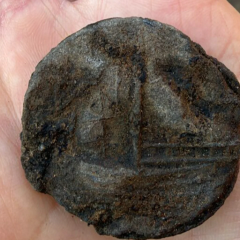
In 2024, bread approximately 8600 years old, dated to around 6600 B.C., was also found in Çatalhöyük, which was fermented. These archaeological findings provide important information about the changing social and burial practices in ancient communities of this region.
This finding in Çatalhöyük indicates the evolution of burial traditions among Neolithic societies... Researchers
The importance of such discoveries lies not only in their historical context but also in their potential to understand the social and cultural organization of ancient people, their views on life and death, as well as the changes in rituals that may have accompanied these stages. Research continues to contribute new data to the study of social structures and cultural practices of ancient civilizations that inhabited what is now Turkey.
This discovery in Çatalhöyük is not the only archaeological event attracting researchers' attention. Recently, in another ancient structure belonging to Hittite culture, possible animal sacrifice remains were discovered, suggesting the religious practices of that time. This finding may also shed light on burial customs and rituals in ancient civilizations.

Read also