Child’s Burial with Golden Earrings and Emperor Aurelian’s Coin Unearthed in Bulgaria

Significant Archaeological Find in Stara Zagora
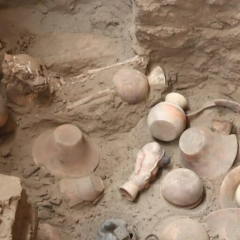
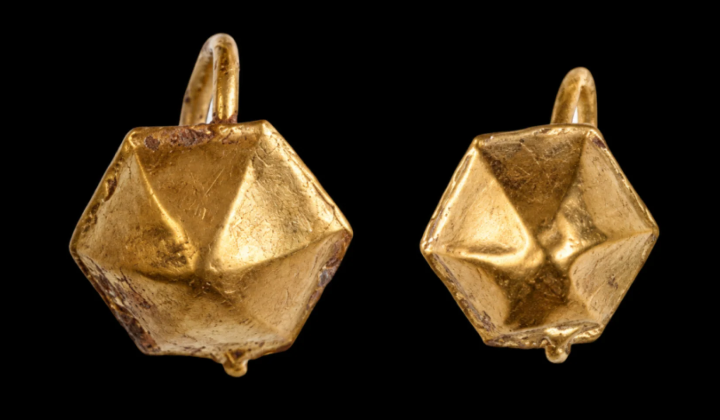
According to НВ — Техно: In the Bulgarian city of Stara Zagora, archaeologists have uncovered a child’s grave containing gold earrings and a Roman coin from the reign of Emperor Aurelian. This burial, dated to around 274-275 AD, is part of a Roman necropolis composed of 135 graves, spanning from the late 2nd to the 5th century AD. The necropolis lies just outside the southwestern walls of the ancient city of Augusta Traiana, a key administrative and economic hub of the Roman province of Thrace.
The child was interred with the head facing west and feet pointing east. The Antoninian coin found in the grave was minted in Serdica-modern-day Sofia-during 274-275 AD. Among the graves in this necropolis, only four contained cremated remains. Some of the tombs were covered with Roman roof tiles, bricks, or stone slabs, while the rest were simple pits.
Historical Importance of the Discovery
Augusta Traiana was founded under Emperor Trajan in the early 2nd century AD and was second in importance only to Philippopolis (today’s Plovdiv). During the reign of Marcus Aurelius, the city gained the right to mint its own bronze coins. Emperor Aurelian ruled from 270 to 275 AD and is known for restoring Roman control over territories that had broken away. This burial find highlights the historical significance of the region and offers valuable new insights into the Roman era in Bulgaria.
This discovery enriches our understanding of Roman burial customs and social structure in Bulgaria. It also reaffirms Augusta Traiana’s role as a prominent administrative center in the Roman province of Thrace. The find opens up promising avenues for future archaeological research in the area, which could enhance both historical scholarship and cultural tourism in Bulgaria.
In addition to this remarkable find, ongoing excavations in Bulgaria continue to reveal significant Roman artifacts, such as the recent discovery of a monumental headquarters associated with the I Italic Legion along the Danube. These archaeological efforts not only enhance our understanding of Roman military presence in the region but also underscore the importance of Bulgaria as a crossroads of ancient civilizations. For more insights into this fascinating aspect of Roman history, explore the details of the Roman headquarters unearthed along the Danube.

Read also