Marble Statue of Goddess Artemis Unearthed by Archaeologists in Bulgaria

Bulgarian Archaeological Discovery
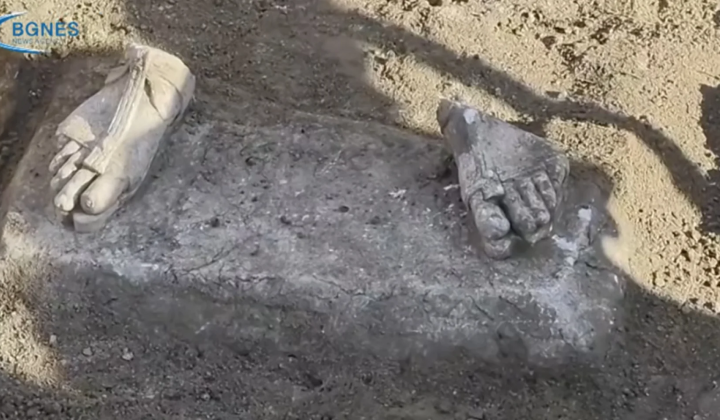
According to НВ — Техно: On June 17, archaeologists in Bulgaria uncovered fragments of a marble statue that they preliminarily believe may depict the goddess Artemis. The find occurred during excavations at Heraclea Sintica, led by Professor Lyudmil Vagalinsky of the National Archaeological Institute with Museum at the Bulgarian Academy of Sciences. A key piece of evidence supporting this hypothesis is the presence of footwear details on the statue, resembling hunting-style sandals.
According to available data, the discovery consists of the lower portion of a marble figure placed on a pedestal in front of the ancient Temple of Heracles. The statue was likely life-sized. Artemis had a strong cult presence in the Middle Struma region during antiquity. Researchers speculate that a previously found marble head may belong to the same sculpture, though this remains unconfirmed.
Research Continues
Work at Heraclea Sintica is ongoing throughout the summer season. Professor Vagalinsky commented on the find, stating:
Heraclea has erupted again! - Professor Lyudmil Vagalinsky
This highlights the significance of the discovery for understanding the region's history and culture.
In addition, earlier reports emerged about the discovery of a prehistoric star map carved into stone in the Rhodope Mountains. The stone, measuring approximately 2×3 meters and oriented along an east-west axis, features 56 carved depressions of varying diameters. Archaeologists have identified constellations such as:
- Ursa Major
- Leo
- Cassiopeia
- Cygnus
- Lyra
- The Pleiades star cluster
These findings underscore the importance of archaeological research in Bulgaria and its contribution to understanding the region's ancient history and culture. The discovery of the Artemis statue and the prehistoric star map may provide new insights into the religious practices and astronomical knowledge of ancient civilizations that inhabited modern-day Bulgaria. Such finds open new avenues for further research and could attract scientists from various fields, including archaeology, history, and astronomy.
The recent excavation at Heraclea Sintica adds to Bulgaria's rich archaeological narrative, especially when considering other significant findings in the region. For instance, a recent discovery of skull injuries on a Neolithic individual sheds light on ancient burial practices and health conditions. Such discoveries not only enhance our understanding of historical life but also emphasize the importance of ongoing research in uncovering the complexities of our past.

Read also