Asteroid Bombardment Prevented Earth's Tectonic Plates from Forming in Its Early Days

New Insights into Earth's Primordial Crust
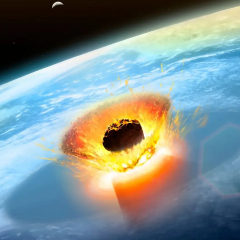
According to НВ — Техно: According to a research team led by geologist Tim Johnson from Curtin University in Australia, Earth’s earliest crust never got the chance to stabilize. They argue that relentless asteroid impacts during the Hadean Eon, which spanned from 4.5 to 4 billion years ago, continuously disrupted the planet's surface. Computer simulations carried out by the group revealed that the heat generated by these collisions likely exceeded Earth’s internal heat, partially melting subsurface rocks and blocking the development of tectonic plates.
The Hadean Eon and Its Lasting Mystery
Spanning from Earth’s formation roughly 4.5 billion years ago to 4 billion years ago, the Hadean Eon left almost no geological trace. Only a handful of ancient rocks and zircon crystals have survived to the present day. To fill in the gaps, researchers turned to the Moon-whose crater-scarred surface preserves a record of the same cosmic violence that once pummeled Earth.
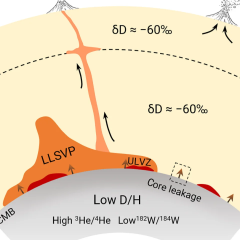
Co-author Craig O’Neill explained that much of the energy from these impacts heated the mantle beneath the crust, causing it to rise, melt, and generate vast volumes of magma. Tim Johnson emphasized that while some scientists previously believed the oldest crust was destroyed by plate tectonics-a process that constantly recycles Earth’s surface-the team now thinks the early crust never even reached a stable state due to the relentless asteroid strikes.
The researchers propose that only after the most intense period of bombardment ended, at the dawn of the Archean Eon, did the crust finally cool, thicken, and become strong enough to support tectonic plate activity. This hypothesis could explain why no continental rocks have survived from Earth’s first 500 million years.
These findings open fresh avenues for understanding our planet’s geological history and its earliest developmental stages. Deeper knowledge of the Hadean Eon may not only shed light on Earth’s past but also inform studies of other bodies in the solar system. It underscores the importance of investigating early geological processes to grasp how planets evolve-since similar mechanisms may have shaped other celestial bodies in our cosmic neighborhood.
The study of Earth's early crust not only sheds light on the impact of asteroid bombardment but also raises questions about other potential threats to our planet. Recent findings suggest that Earth may face challenges beyond just these cosmic collisions, as outlined in another research article. Understanding these diverse risks is crucial for comprehending Earth's geological history and future stability. For more on this topic, see the various dangers Earth confronts.

Read also