Earth Faces Threats Beyond Just Asteroid Impacts, New Research Suggests

Farjion's Study on Mass Extinctions
According to НВ — Техно: According to researcher Farjion, mass extinctions on Earth may have been triggered not only by asteroid strikes but also by the gravitational pull of massive cosmic objects passing nearby. These flybys, he argues, could have generated tsunamis, volcanic eruptions, and climate shifts.
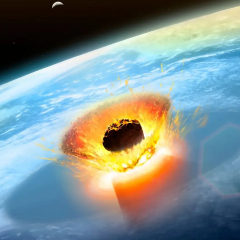
Farjion's work acknowledges that the Chicxulub asteroid impact roughly 64 million years ago led to the dinosaurs' demise. However, he also explores an alternative theory linking mass extinctions to gravitational forces exerted by large celestial bodies.
How Space Objects Affect Earth
The outer Solar System may contain thousands or even tens of thousands of objects the size of dwarf planets. Farjion points out that close passes of such bodies near Earth have occurred far more often than direct collisions. He suggests that tidal effects from these encounters could have contributed to several mass extinctions over the past 600 million years.
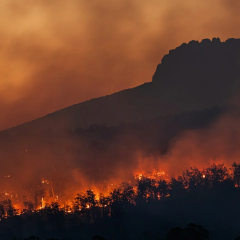
He also highlights that major extinction events often coincided with climate changes, cosmic impacts, and widespread volcanic activity.
- The Permian-Triassic boundary event, approximately 251 million years ago, wiped out between 80% and 95% of all species on the planet.
- Farjion cites fossil coral data indicating a sudden shift in the rate of day-length increase at the end of the Devonian period.
- An impact could not have altered the distance between Earth and the Moon, whereas the gravitational influence of a large object could have done so.
Farjion's research thus offers a fresh perspective on the potential causes of Earth's mass extinctions, emphasizing gravitational effects that may have significantly impacted the planet's environmental conditions.
These findings could reshape our understanding of past ecological disasters, underscoring the role of cosmic factors in shaping life on Earth.
Science Alert
Farjion's study further complicates the picture of extinction causes, urging the scientific community to more thoroughly examine the influence of space objects on the planet's geological history.
As researchers continue to unveil the complexities of Earth's past, it's essential to consider how cosmic events shape our planet's future. While Farjion's study highlights the influence of massive celestial bodies, it also raises questions about the long-term survival of life in an ever-changing universe. For a deeper understanding of potential existential threats, including the eventual fate of our planet as it relates to the Sun, explore more about how life could be at risk even if Earth survives cosmic challenges.

Read also