D7: A New Democratic Alliance Reshaping Global Cooperation

The Rise of the 'Democratic Seven' (D7)
According to ХВИЛЯ: As the post-World War II international order crumbles, a new framework for collaboration among mid-tier democracies is being proposed: the 'Democratic Seven' (D7). This initiative aims to lead the charge against coercion by offering a flexible membership structure and focusing on six key areas, including trade, defense, and technology. Designed to operate without the United States, the D7 nonetheless leaves the door open for Washington's eventual return.
The global order established after World War II is now undergoing profound transformation. On the battlefield in Ukraine, North Korean soldiers and Iranian drones have appeared. Meanwhile, tariffs have climbed to levels not seen since the 1930s. China is leveraging economic dependence as a tool for political pressure against democracies from Australia to Lithuania and from South Korea to Canada.
D7 Members and Their Influence
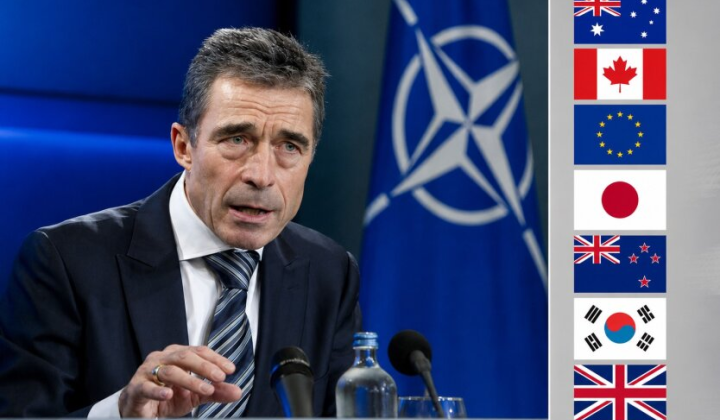
The founding members of the D7 will include:
- Australia
- Canada
- European Union
- Japan
- New Zealand
- South Korea
- United Kingdom
Combined, the D7's GDP will reach approximately $36 trillion-roughly 30% of the global economy. The initiative builds on the Coalition of the Willing, launched in March 2025 by UK Prime Minister Keir Starmer and French President Emmanuel Macron. That coalition includes 34 countries, or 35 when counting Ukraine.
D7 cooperation envisions a limited-membership trade alliance to preserve open, rules-based trade amid challenges to reforming the World Trade Organization (WTO). Additionally, the initiative proposes an economic 'Article 5'-modeled on NATO's collective defense clause-to build a united front against coercion.
Other D7 workstreams include a Democratic Technology Initiative aimed at setting standards, harmonizing export controls, and co-investing in artificial intelligence, quantum technologies, and space. A critical raw materials strategy will also be developed to break China's grip on rare earth processing. The D7's defense pillar will draw lessons from Ukraine and the Coalition of the Willing, while coordinated global investments offer a real alternative to China's Belt and Road Initiative.
In short, the 'Democratic Seven' could become a vital platform for democracies seeking effective collaboration and interest protection in a shifting global landscape. This initiative addresses today's pressing challenges, including rising competition from authoritarian regimes and the need to strengthen economic and defense ties among democratic states. Amid global instability, the D7 may provide a framework for consolidating efforts and jointly responding to the challenges facing nations that share common values.

Read also