Mastering Execution Excellence in HR: A Critical Competency for Modern Professionals

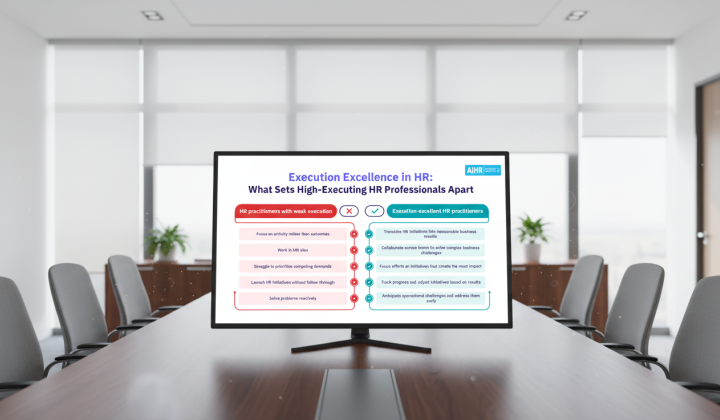
The Growing Significance of Execution Excellence in HR
According to AIHR: In today's dynamic business environment, the competency of 'Execution Excellence' is becoming increasingly vital for Human Resources (HR) professionals. This skill is one of the six core competencies within the T-Shaped HR Competency Model developed by AIHR. This framework outlines the essential knowledge and abilities HR experts need to perform effectively in a rapidly evolving labor market.
While an AIHR study indicates that 82% of HR professionals are confident in their task execution abilities, the role itself has been fundamentally transformed. The rise of automation, generative artificial intelligence, shifting labor market dynamics, and a global skills shortage demand new approaches. These factors necessitate the development of 'Execution Excellence,' which comprises four key dimensions:
- Agility and responsiveness,
- Problem-solving and decision-making,
- Cross-functional collaboration,
- Systems thinking.
Developing Execution Excellence: Key Methods
Effective methods for cultivating this competency include scenario planning and the application of established project management methodologies like Agile, Scrum, and Waterfall. Utilizing tools such as RACI diagrams and setting SMART goals are also crucial. Furthermore, mastering specific problem-analysis techniques is essential, including:
- Problem tree analysis,
- Root cause analysis,
- CATWOE analysis,
- Kepner-Tregoe analysis,
- SCAMPER analysis.
These tools empower HR specialists to navigate workplace challenges with greater efficiency and impact. For HR leaders aiming to build future-ready teams, focusing on this competency is no longer optional but a strategic imperative.
Beyond Execution Excellence, the T-Shaped HR model identifies five other core competencies: Business Acumen, Data Literacy, Digital Agility, AI Fluency, and People Advocacy. Holistic development across these areas is a primary objective. Recommendations for team development involve implementing robust project management practices, demonstrating critical thinking, regularly practicing problem analysis, strengthening Business Acumen and People Advocacy skills, and fully integrating Execution Excellence into daily organizational operations.
Cultivating Execution Excellence underscores the need for HR professionals to adapt to the persistent challenges of a modern, ever-evolving workplace. Given the accelerating pace of change, the ability to respond swiftly and implement effective solutions is critically important for organizational success. Adopting advanced project management and problem-analysis methods can significantly enhance the strategic value and effectiveness of HR functions.
As organizations strive to enhance their HR capabilities, understanding the various strategies for improving team performance becomes essential. Exploring effective practices can provide HR professionals with the tools needed to address modern challenges and foster a productive work environment. For a deeper dive into actionable methods that can elevate HR team effectiveness, consider reviewing insights from strategies to boost HR team performance.

Read also