A Physicist Builds a Model of How Time Emerges Inside a Quantum System


An Experimental Model for the Emergence of Time
According to НВ — Техно: Physicist Barontini has developed an experimental model demonstrating how time can emerge within an isolated quantum system, using a Bose-Einstein condensate. His findings were published in the journal Physical Review Research. The study suggests that time arises when an observer deliberately discards a portion of the available information.
Barontini's Investigation
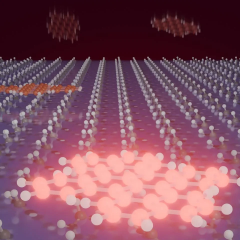
In his experiment, Barontini worked with a cloud of ultracold atoms in a Bose-Einstein condensate state. The temperature was brought as close as possible to absolute zero, reaching -273.15 °C. The condensate was split into two sections using a thin laser light barrier, creating a bright sector (under observation) and a dark sector (where information was ignored).
Atoms periodically flowed across the laser barrier, giving rise to new terms:
- moments of atomic influx were called local Big Bangs,
- moments of outflow were called Big Crunches.
The research also revealed that instead of conventional laboratory time, an entropy-based time was recorded, measured by the amount of entropy between the two halves of the system. When the exchange of entropy accelerated, the experiment's internal clock sped up; when it slowed, the clock slowed down. Notably, when equilibrium was reached between the sectors and energy flow ceased, time came to a complete halt.
“Time and its irreversible direction emerge when an observer consciously gives up part of the information.” - Barontini
Barontini also derived a version of the Schrödinger equation that replicated the laboratory observations. Based on these results, the researcher concluded that future work will involve modeling analogs of black holes and other phenomena from the early universe, potentially opening new frontiers in understanding the nature of time and space.
Barontini's work highlights the critical role of interaction between the observer and the quantum system, which could fundamentally change our understanding of time. The results may lay the groundwork for further experiments in this field, advancing theoretical concepts related to the nature of time and space. This could also have implications for studying black holes and other cosmic phenomena, which are active topics in modern physics.
Barontini's groundbreaking work aligns with recent findings suggesting that time may originate from quantum systems. This research not only enhances our understanding of time's nature but also paves the way for exploring complex phenomena such as black holes and the early universe, highlighting the intricate relationship between observation and the passage of time.

Read also