Amidst the Flames of War, a Historian Fights to Save the Legacy of Makhno and His Region

Rescuing History from the Front Lines: The Race to Preserve Makhno's Homeland
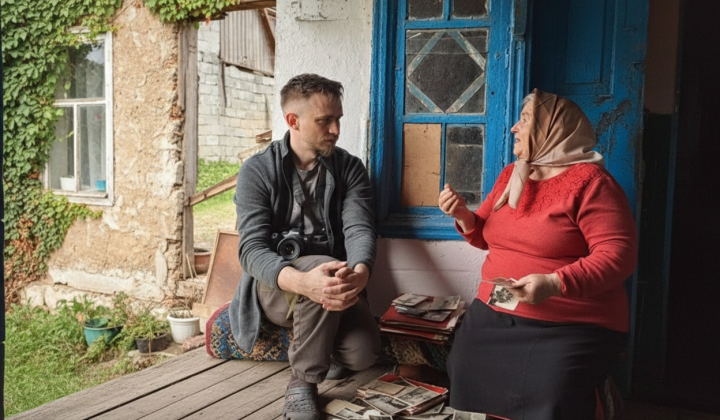
According to Главком: Historian Serhii Zvilinskyi has described the dire situation in Huliaipole and its surrounding villages against the backdrop of full-scale war. The town, which served as a center of the Ukrainian Revolution of 1917-1921 and the headquarters for Nestor Makhno's anarchist army, is now under shelling. Zvilinskyi, who was born and lived in Huliaipole before the war, is dedicated to rescuing cultural artifacts and documenting the testimonies of local residents. Huliaipole holds a unique place in 20th-century history as the heartland of a major peasant insurrection.
The Plight of the Villages
During the first years of the war, access to the villages of the Huliaipole region was possible only from a distance of 3-4 km from the front line. Settlements such as:
- Verkhnia Tersa
- Rizdvianka
- Ternuvate
- Vozdvyzhivka
- Liubytske
once had populations of 500 to 1,000 people. Remarkably, up to 90% of residents remained in these villages until this past winter. The oldest living witness from that era was born in 1922 and is now 103 years old.
Serhii Zvilinskyi notes that most participants in the Makhnovist movement were executed in 1937-1938. The region retained numerous historical monuments until 2025, including commanders' houses, Makhno's headquarters, and printing press buildings, which stand as witnesses to the past. These landmark structures mostly date from the late 19th to early 20th centuries.
However, the situation in the villages continues to deteriorate.
'Before, if a house was still standing, even with a destroyed roof, a family could contact us and ask us to retrieve items carrying family memory-archives, photos-and we could do it. Now the villages are burned to the ground,' says Serhii Zvilinskyi.
People held onto their homes until the very last moment, leaving only during massive bombardments. 'Some left just hours before their village was completely destroyed,' he adds.
Zvilinskyi emphasizes that the oldest remaining residents remember the 1930s. 'There are very few of these people left-they are passing away, taking with them information about an entire century,' the historian notes. In Huliaipole, almost every family has members who were connected to the Makhnovist movement, including his own great-grandfather. The urgency of rescuing this cultural heritage and documenting eyewitness accounts grows increasingly critical as the threats mount.
The crisis in Huliaipole and its environs is not only an example of a humanitarian disaster but also evidence of the disappearance of vital elements of Ukraine's cultural and historical legacy. In wartime, as architectural and historical monuments face destruction, the efforts of individuals like Serhii Zvilinskyi become critically important for preserving collective memory. This underscores the necessity for international support and attention to the cultural losses a nation can suffer during conflict.

Read also