Hard Skills - What Are They and How Professional Skills Are Defined

Every progressive person should know what hard skills are. This is very important both for creating a resume and for future promotion.
In today's world of employment and career development, professional skills that allow a person to effectively perform their duties and achieve high results are gaining special importance. One of the key categories of such skills is hard skills, which represent specific knowledge and abilities necessary for performing professional tasks.
What are hard skills?

These skills differ in measurability and the possibility of formalized verification, for example, through testing, certification, or demonstration of practical results. Having a high level of hard skills allows a specialist not only to perform work at a high level but also to quickly adapt to changes in the professional field, mastering new tools and technologies. For employers, such skills become an indicator of an employee's qualifications, and for the specialist, a possibility for career growth and increasing competitiveness in the labor market.
Hard skills are specific professional skills and knowledge that can be clearly measured, described, and verified. They include the ability to work with specific tools, technologies, programs, knowledge of standards and methodologies, as well as technical competence in a certain area. Unlike general skills, hard skills reflect the practical training of a specialist and allow assessing their ability to perform specific tasks. Examples include proficiency in programming languages, ability to use professional equipment, knowledge of accounting, analytical skills, or working with graphic editors. Such skills are often developed through education in higher education institutions, specialized courses, or during practical work.
Importantly, hard skills can be formalized: take a certification exam, demonstrate a portfolio, provide testing results, or complete a specific task that confirms professional level.
How are hard skills different from soft skills?

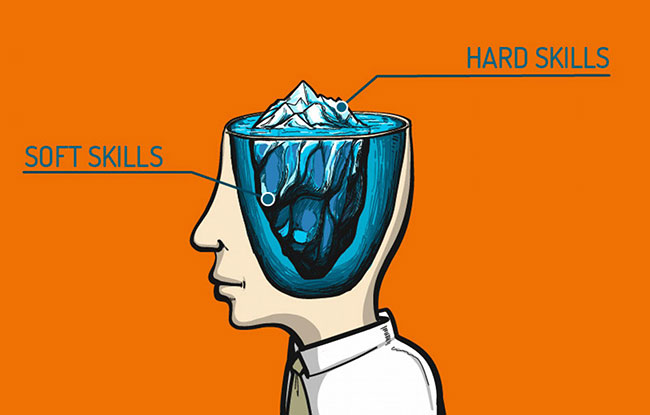
The main difference between hard skills and soft skills lies in measurability and specificity. Hard skills are easily verified through practical tasks, tests, or certification exams, whereas soft skills are communication skills, teamwork, time management, emotional intelligence, which are difficult to formalize. For example, knowledge of a programming language is a hard skill, while the ability to work effectively in a team during a project is a soft skill. Both types of skills are important for professional development, however, without hard skills, a specialist cannot perform specific work at the required level, even if they have excellent soft skills. At the same time, having only technical skills without communication and management skills may limit career growth and effectiveness in teamwork. Therefore, modern companies look for specialists who possess a combination of hard and soft skills, capable of not only performing technical tasks but also effectively interacting with colleagues, clients, and management.
Examples of hard skills in various fields
Hard skills largely depend on the field of profession and the specifics of job duties. In the IT field, examples of hard skills include proficiency in programming languages (Java, Python, C++), database management skills, knowledge of algorithms and data structures, ability to work with version control systems, and development of web and mobile applications. In marketing and advertising, hard skills include market analysis, SEO and SMM, working with advertising platforms, graphic design, content creation, and planning advertising campaigns. In finance and accounting, important skills include bookkeeping, financial planning, working with financial programs, reporting, and auditing. In the medical field, hard skills include proficiency in medical instruments, knowledge of treatment protocols, skills in performing procedures and diagnostics. For manufacturing and engineering, important skills are working with technical drawings, proficiency in equipment, knowledge of technological processes and safety standards. These examples demonstrate that hard skills are specific to each profession and form the basis of professional competence.
How to develop and improve hard skills?

Developing hard skills requires a systematic approach and regular practice. First of all, it is worth studying the theoretical material through courses, training programs, books, and online resources. The next step is the practical application of knowledge, for instance, by executing projects, tasks, internships, or freelance projects. It is also important to receive feedback, analyze one's mistakes and improve the approach. Effective methods for developing hard skills include certification programs, participation in conferences, hackathons, master classes, and workshops that allow one to test knowledge in practice and receive official confirmation of competence. It is also advisable to use online platforms that allow practicing programming, design, financial analysis, and other areas. Regular updating of knowledge and mastering new technologies are key aspects of maintaining a high level of professional skills, especially in rapidly changing fields such as IT or marketing.
Why are hard skills important for career and business?

The presence of developed hard skills directly impacts both the effectiveness of work and the competitiveness of both the employee and the company. For a career, this means the ability to perform complex tasks, occupy high positions, and receive higher salaries. For businesses, the presence of qualified specialists allows ensuring the quality of a product or service, reducing the risk of errors, and enhancing productivity. Hard skills also help organizations quickly adapt to changes in the market and technological innovations because employees are capable of mastering new tools and methods. Moreover, possessing strong professional skills increases confidence among clients and partners in the company, contributing to the development of brand reputation and image.
Balance between hard and soft skills

Achieving high results in a career and business requires a harmonious balance between hard and soft skills. Technical skills allow performing work at a high level, while soft skills ensure effective communication, time management, leadership, and team interaction. For instance, a software developer may have excellent proficiency in programming languages, but without teamwork skills and communication with the project manager, their effectiveness will be limited. Similarly, a sales manager must possess technical knowledge of the product to effectively advise clients, while also having strong soft skills for building connections and persuasion. Therefore, modern companies focus on the development of both types of skills, as only their combination allows achieving high results and maintaining competitiveness in the market.
The balance between hard and soft skills also fosters professional development, broadens opportunities for career growth, and increases motivation. A specialist with strong technical knowledge and developed social skills becomes a valuable resource for the company, capable of solving complex tasks, effectively interacting with the team and clients, and adapting to changes in the professional field. This approach helps shape a modern corporate culture aimed at development, efficiency, and results.

Read also